Most healthcare software projects don’t fail because the idea is bad. They fail because the execution breaks down.
The roadmap gets fuzzy. Workflows drift. Compliance becomes a traffic jam. And what started as a bold, promising product ends up stuck in endless review cycles — or worse, never ships at all.
At Technology Rivers, we’ve spent more than a decade helping healthcare teams build and launch HIPAA-compliant products — including those powered by GenAI and large language models. And no matter how advanced the tech, the same traps show up again and again:
Why Healthcare Projects Fail (Even with Great Ideas)
- Discovery steps skipped
- Requirements left vague
- Compliance surprises at the worst possible moment
This guide is here to help you avoid all that.
We’ll walk you through the software product development lifecycle — from idea to launch — with a focus on doing it faster, smarter, and with fewer “uh-oh” moments.
Whether you’re mapping out your MVP or scaling an LLM-based tool, consider this your field guide to building software that actually ships — and makes a difference.
1. Clarify the Idea (Discovery & Validation)
Before a single line of code gets written, great teams ask better questions.
Not: What features should we build?
But: Why does this product need to exist? Why now? Who’s it really for?
Skip this step, and you risk solving the wrong problem — or worse, building something no one wants to use.
Here’s how to start strong:
- Know your users. What pain are they living with today? What tools are they cobbling together — and what’s driving them up the wall?
- Define the real problem. Can you explain it in two sentences without mentioning features, tech, or buzzwords? If not, keep digging.
- Validate the need. Talk to potential users. Are they actively trying to solve this? Would they pay for a better way?
- Think compliance early. If your idea involves PHI or touches HIPAA in any way, build that into your thinking now. Retroactive compliance = rework, delays, and risk.
- Use GenAI with purpose. Planning to bring in large language models? Be honest — is it solving a real user problem or just adding hype? What role will it play, and how will you manage risk?
At this stage, your job isn’t to be certain — it’s to be clear. You’re laying the foundation for every decision that follows in the software product development lifecycle.
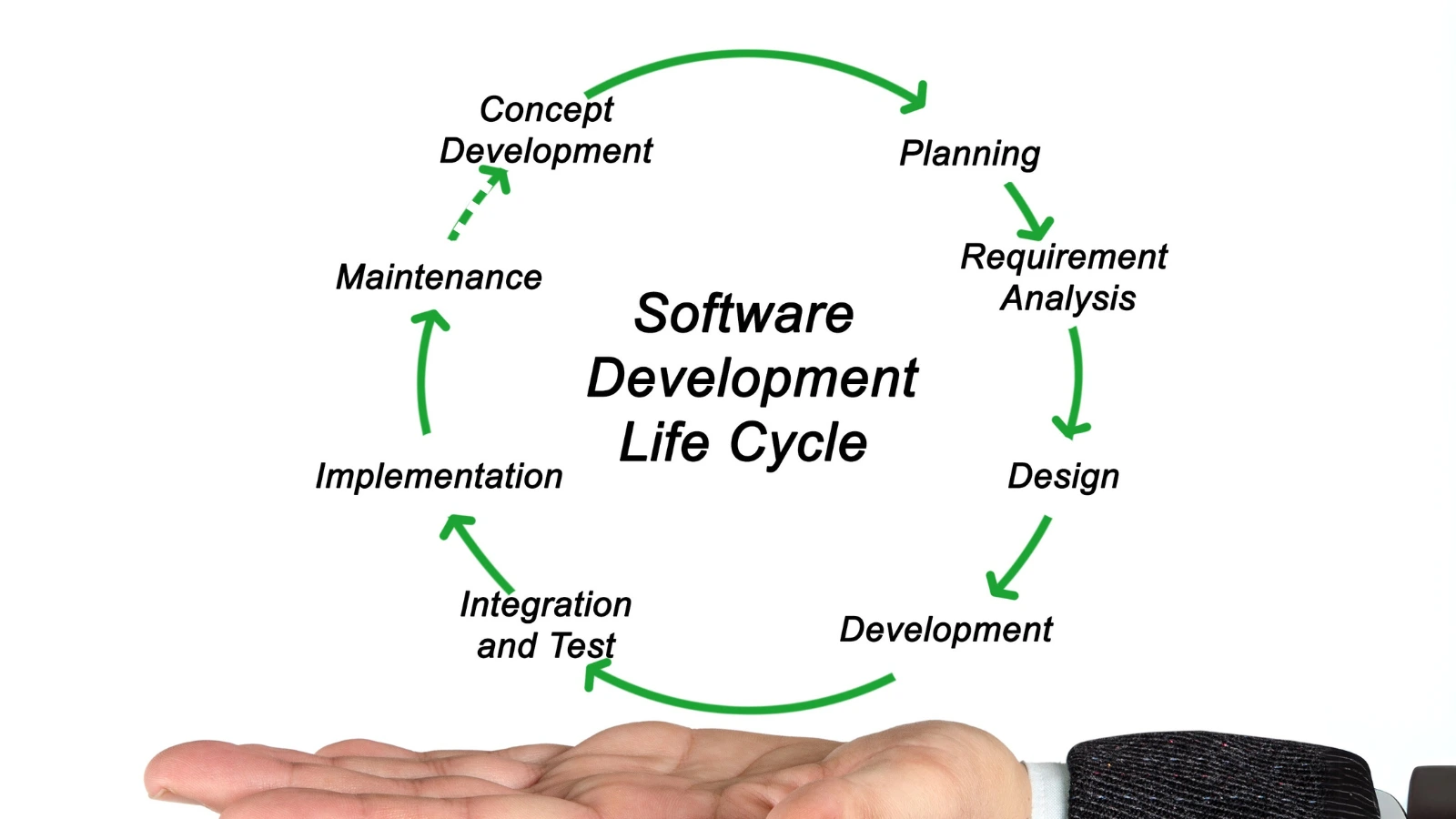
2. Map the Full Software Product Development Lifecycle
Once your idea feels solid, it’s tempting to jump straight into development.
But here’s the hard truth: No amount of code can fix a fuzzy plan.
Great software doesn’t just happen — it’s mapped. And that map? It’s the backbone of product lifecycle management for software development.
In healthcare, and especially with GenAI or LLM-based tools in play, that map matters even more. Because poor planning here doesn’t just create bugs. It leads to compliance delays, wasted resources, and features no one needs — all while trust slowly slips away.
Here’s how to stay ahead:
- Define the scope (and hold the line). What’s in for v1? What’s not? Ruthless clarity keeps the team focused — and your launch on track.
- Build a real roadmap. One that aligns with business goals, not just dev sprints. Think adoption, partnerships, compliance milestones — the moments that actually move the needle.
- Involve compliance early. Legal, security, and regulatory teams should never be an afterthought. Wait too long, and you’ll be rewriting features under pressure.
- Plan for LLM-specific risks. If you’re building LLM-based products, your lifecycle planning must include training data, human oversight, and model evaluation. These are non-negotiables for trust, safety, and compliance.
- Think beyond the MVP. Even if you’re building lean, make choices now that your future self won’t curse — like scalable architecture, secure hosting, and audit-friendly infrastructure.
- Put AI in its place. GenAI can be powerful, but it needs boundaries:
- Will the model improve over time?
- Who’s responsible for retraining and oversight?
- How will you monitor output and mitigate hallucinations?
- Can you explain what’s happening inside the model? (Avoid black-box tools without transparency.)
A solid approach to product lifecycle management for software development — especially for GenAI tools — isn’t just a process. It’s protection against scope creep, compliance missteps, and the kind of rework that kills momentum.
3. Design for the People Who’ll Use It
Design isn’t just how something looks — it’s how it works, how it feels, and how quickly someone can trust it. In healthcare, that trust is everything. The stakes are higher, and the tolerance for friction is low.
Patients want answers.
Providers want speed.
Administrators want tools that just work — without the drama.
That’s why design should start with the people using your product, not the pixels.
- Begin with user flows. Don’t jump into UI too soon. First, map out what each person is trying to do, and then make it as easy as possible to do it.
- Test early and often. Show wireframes to real users. Watch where they pause, struggle, or click the wrong thing. The earlier you spot confusion, the cheaper it is to fix.
- Prioritize simplicity. Use familiar language. Keep layouts clean. Build in accessibility from the start — screen readers, color contrast, tap targets. It should feel effortless for everyone.
- Design for compliance, too. Security and permissions aren’t just technical concerns. They shape how data is displayed, accessed, and protected — right in the UI.
- Don’t overlook admin tools. Your end users may never see them, but a clunky admin experience can quietly wreck your operations.
In the end, great design does more than make things usable. It makes them trustworthy — and in healthcare, that’s the baseline.
4. Build Smart, Build Small (The MVP Phase)
At this stage, the instinct is to move fast. But without structure, speed often leads to costly rewrites down the line. A well-built MVP helps avoid that, delivering value quickly without compromising long-term stability.
A successful MVP is the foundation of the software product development lifecycle, especially when working with LLM-based products, where early feedback plays a critical role in ensuring safety, usability, and regulatory compliance.
To keep your MVP focused and effective, follow these principles:
- Solve one problem. Really well. What’s the smallest feature set that still delivers value? Cut the rest. MVP ≠ “lite version of everything.”
- Choose the right tech. It’s tempting to go with what’s fastest, but you also need something scalable, secure, and compliant. Especially in healthcare.
- Bake in compliance. HIPAA isn’t a patch you add later. Build with encryption, access controls, and audit logs from the jump.
- Handle GenAI with care. If you’re using LLMs:
- Set clear boundaries for what it can and can’t do
- Add human oversight where needed
- Avoid black-box tools you can’t explain or control
- Stay in the loop. Founders who stay close to the development process — reviewing sprints, asking questions, giving feedback — avoid the “wait, what happened?” moment later.
A smart MVP doesn’t just get you to launch. It earns you real feedback, builds trust, and sets the stage for everything after.
5. Test, Improve, and Launch (The Right Way)
You’ve built your MVP. So… launch time?
Almost — but not quite.
Before anything goes live, you need to make sure it actually works in the real world — not just in your development environment. Because in healthcare, testing isn’t just about catching bugs. It’s about earning trust and making sure your product holds up under pressure.
Here’s how to do it right:
- Test in the wild. Different devices, screen sizes, and environments — especially places like rural clinics or busy hospital networks. If it breaks there, it’s not ready.
- Watch real users. Usability testing is one of the best investments you can make. Pay attention to where people pause, get confused, or make the wrong click. Every moment of friction is an opportunity to improve.
- Run compliance checks. This part isn’t negotiable. Think:
- Penetration testing
- Data storage validation
- Role-based access reviews
- HIPAA documentation and audit readiness
- Prepare to listen post-launch. The first few weeks will teach you a lot if you’re listening. Set up clear ways for users to share issues or suggestions. Watch behavior patterns. Prioritize what really matters.
- Stay close. The work doesn’t end at launch. The best products keep evolving, and the teams behind them keep showing up.
Great products don’t succeed just because they launch. They succeed because someone sticks around to make them better.
Wherever You’re At in the Process…
It’s easy to underestimate how much can go sideways between idea and launch especially in healthcare and especially when GenAI is part of the picture.
That’s why product lifecycle management for software development for GenAI tools isn’t just best practice. It’s your insurance policy against spiraling scope, compliance surprises, and products that quietly miss the mark.
And when you’re working with LLM-based products? Lifecycle planning becomes mission-critical. It helps you avoid hallucinations, navigate evolving regulations, and build tools that users actually trust.
Because great software doesn’t come from just a great development team. It comes from a strategy that sees around corners and makes smart choices from day one.
That’s what we help our clients do — whether you’re just getting started or trying to fix a v1 that missed the mark.
If you’re building something in healthcare and want a second set of eyes on the plan, let’s talk.
We’ll help you go from good idea to great product — without the costly detours.