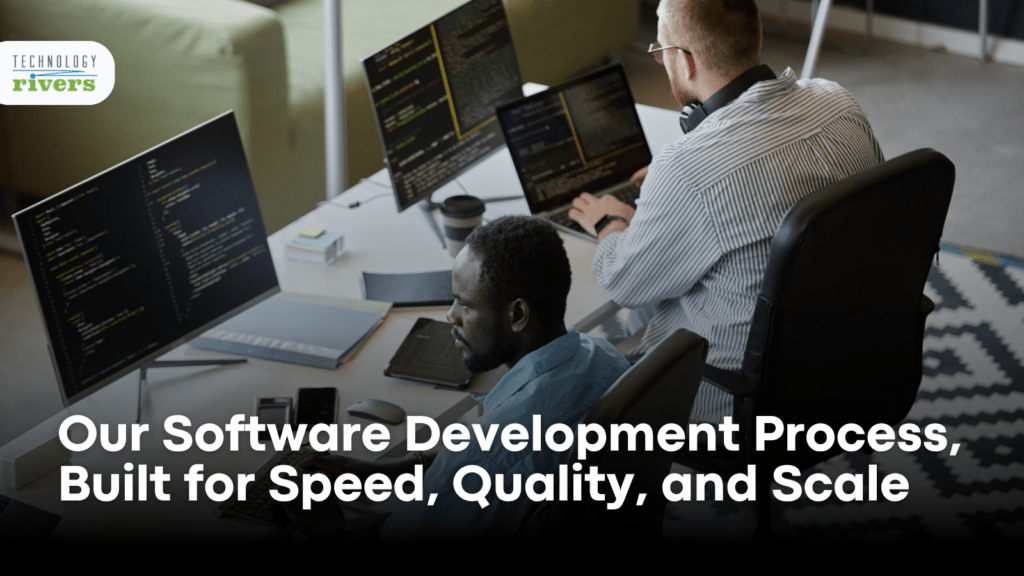
Most software projects do not break down because the idea was weak. They break down because teams start building before they have alignment on requirements, workflows, architecture, and launch priorities. That is why our software development process is designed to bring structure before speed, not instead of it.
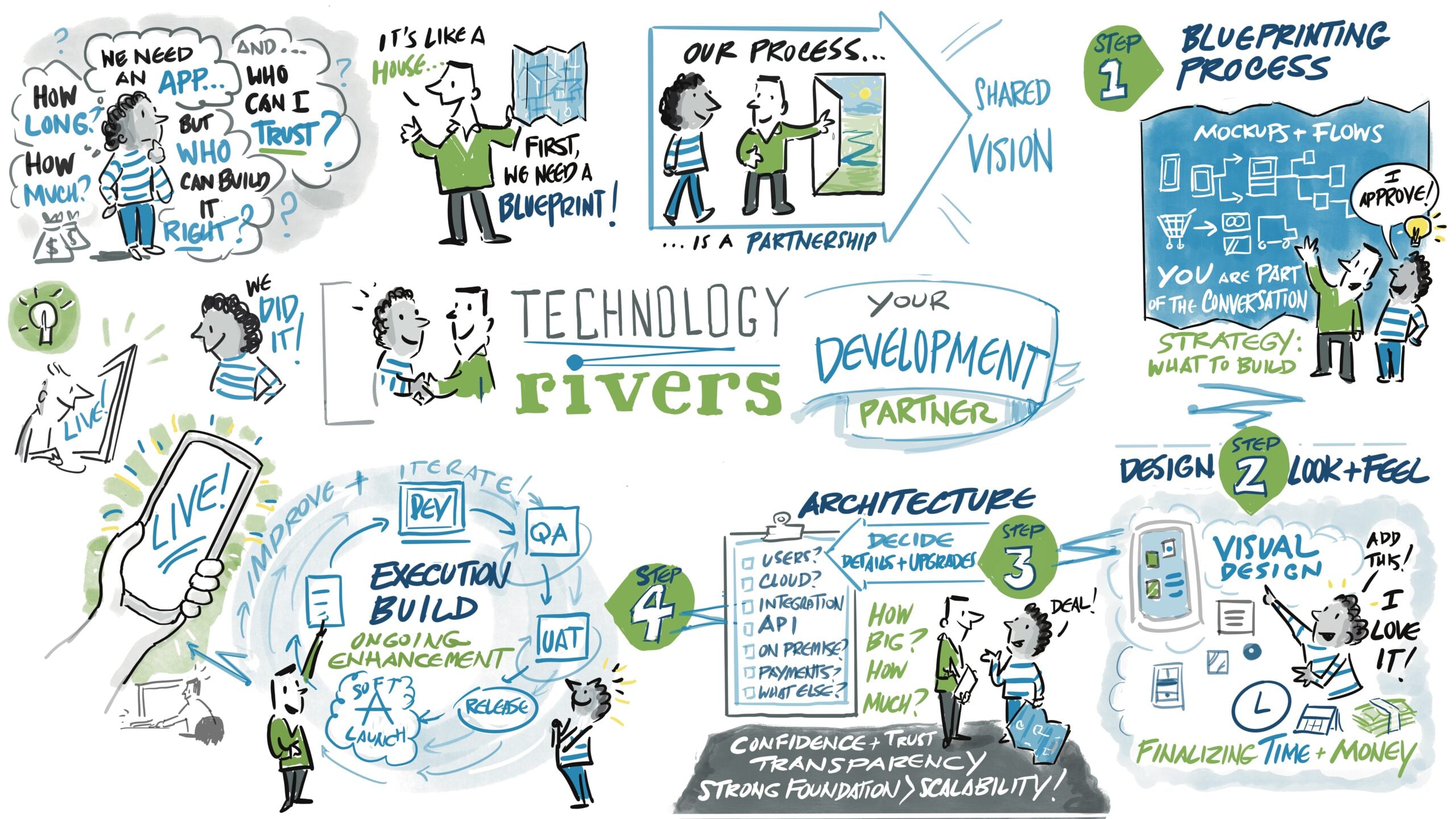
On our process page, we define a five-step path from concept to launch:
- Blueprinting & Strategy
- User Experience & Design
- Architecture & Infrastructure
- Development & QA
- Launch, Monitor & Improve
For startups, healthcare organizations, and growing product teams, that structure is not overhead. It is how we reduce rework, improve quality, and help products scale with fewer surprises. Here is how we work.
Why a Defined Software Development Process Matters
A product idea is not the same thing as a build-ready plan. When teams move into development too early, they usually pay for it later through scope confusion, delayed releases, weak UX, technical debt, or expensive rebuilds. Our process is built to prevent that.
We start by turning broad ideas into clear product decisions. Then we connect those decisions to design, architecture, engineering, QA, and post-launch improvements. That gives our clients a more reliable path from concept to working software. As we explain on our process page, every successful product follows a clear and structured process, and that structure is what supports speed, quality, and scale.
What Makes Our Process Different
We do not force every project into the same rigid template. Instead, we use a repeatable framework that adapts to the product stage, business goals, and team setup.
Our process is built around five delivery stages, but it also supports multiple engagement models, including
- Fixed-Price
- Time & Materials
- Staff Augmentation
Each model includes AI-accelerated delivery, a dedicated engineering and product team, project management with transparent reporting, quality assurance, and post-launch support.
That balance matters. A loose process creates confusion. A rigid one slows teams down. We aim for the middle, clear enough to reduce risk, flexible enough to help real products evolve.
Step 1: Blueprinting and Strategy
Every strong product starts with clarity. In our Blueprinting & Strategy stage, we define goals, users, workflows, use cases, and early scope. We also document requirements and create initial mockups and low-fidelity wireframes.
This stage helps answer the questions that cause the most downstream problems when left unresolved. What should be in the MVP? What can wait? What are the key user flows? What does success actually look like?
By solving those questions early, we reduce waste before it reaches design and development.
Step 2: User Experience and Design
Once the strategy is clear, we turn it into something users can understand and teams can build. Our User Experience & Design stage includes user flows, wireframes, high-fidelity UI design, clickable prototypes, and scalable design systems built in Figma. We also note on our site that we use AI-enhanced tools to accelerate design exploration while following Apple, Google, and accessibility guidelines.
Good design is not decoration. It is what helps a product feel intuitive, reduces friction in critical workflows, and lowers the number of costly changes later in development.
Step 3: Architecture and Infrastructure
A product that looks good still needs a strong technical foundation. In our Architecture & Infrastructure stage, we define how system components work together, plan integrations, data models, scalability, and security, choose the right tech stack, and set up development, QA, and production environments.
This is one of the most important steps for products that need to scale, support complex workflows, or meet healthcare and compliance requirements. Technical shortcuts taken here usually become larger problems later. We would rather design for stability early than patch around weak architecture after launch.
Step 4: Development and QA
With strategy, design, and architecture aligned, we move into Development & QA. This stage is all about building backend, frontend, and mobile applications in iterations, integrating features into working builds, conducting QA alongside development, and validating features through testing and real use cases.
That approach matters because testing should not be a final checkpoint. It should be part of the build process. Continuous QA helps us catch issues earlier, keep progress visible, and protect launch quality without slowing momentum.
This is also where disciplined execution matters most. Fast development only helps if the product stays stable, usable, and aligned with the original goals. That is one reason related lessons in why software projects fail are so relevant to how we work every day.
Step 5: Launch, Monitor, and Improve
Launch is not the finish line. It is the start of real product usage. In our final stage, we support production deployment, monitor usage and errors, track feature adoption, and guide continuous improvements through analytics, user feedback, and post-launch support.
This matters because products do not prove themselves in staging. They prove themselves in the hands of users. A strong post-launch process helps us improve what matters, resolve issues faster, and support long-term growth instead of treating launch like the end of the engagement.
Choosing the Right Engagement Model
We know different products need different delivery structures. That is why we offer three core engagement models on our process page.
- Fixed-Price is best for well-defined MVPs, rebuilds, or version 1 releases.
- Time & Materials is ideal for evolving projects or long-term support.
- Staff Augmentation helps internal teams move faster with added engineers, designers, or QA support.
The right model depends on how much scope is already defined, how quickly priorities may change, and how much internal product capacity you already have.
What Clients Notice About Working This Way
One reason this process works is that it connects strategy, design, development, and delivery instead of treating them as separate handoffs. Technology Rivers’ portfolio includes healthcare platforms such as the Konsuld doctor consultation platform and a remote patient monitoring solution, which reflect the kind of structured execution needed for real-world products, not just prototypes.
That is the real value of a defined process. It helps teams move from an idea or requirement set to a product that is usable, scalable, and better prepared for launch.
The best processes are not just efficient. They also make collaboration easier.
One client described that experience this way,
“They did not force a rigid process, instead, they asked where we were trying to go and proposed a thoughtful path to get us there.”
Other clients also feel the same way.
That is exactly how we think about delivery. We bring a real process, but we shape it around the product and the business, not the other way around.
Build With a Process Designed for Real Products
Whether you are planning a new product, rebuilding unstable software, or looking for a more structured way to scale, we bring a process designed for real-world execution. From strategy and UX to architecture, development, QA, and post-launch improvement, we help teams build with more clarity and less risk.
Explore our software development process, learn more about custom software development services, review our work, or schedule a consultation to discuss your product.
FAQs
Why is a defined software development process important?
A defined software development process ensures alignment across teams, reduces rework, improves product quality, and helps deliver projects on time. Without structure, projects often face delays, technical debt, and unclear requirements.
What are the main stages of a software development process?
The main stages typically include planning and strategy, user experience design, architecture and infrastructure, development and testing, and post-launch monitoring and improvement.
How does a structured development process reduce project risk?
A structured process identifies requirements early, defines workflows clearly, and ensures proper architecture before development begins. This reduces costly changes, delays, and scalability issues later.
What is the difference between Agile and a structured software development process?
Agile focuses on iterative development and flexibility, while a structured software development process provides a clear framework across all stages. In practice, many teams combine both for better results.
How do you choose the right engagement model for software development?
The right model depends on your project scope and flexibility needs. Fixed-price works best for well-defined projects, time and materials for evolving requirements, and staff augmentation for extending internal teams.
How long does a software development process take?
The timeline depends on the complexity, scope, and requirements of the project. A simple MVP may take a few months, while complex enterprise systems can take significantly longer.
Can AI improve the software development process?
Yes, AI can accelerate design, development, and testing, but it works best when combined with a structured process that ensures scalability, security, and quality.