In healthcare tech, disconnected systems aren’t just frustrating—they’re dangerous. Imagine a patient’s critical data trapped in one platform, while another team uses a completely different tool with no visibility. These silos create delays, errors, and missed opportunities for better care.
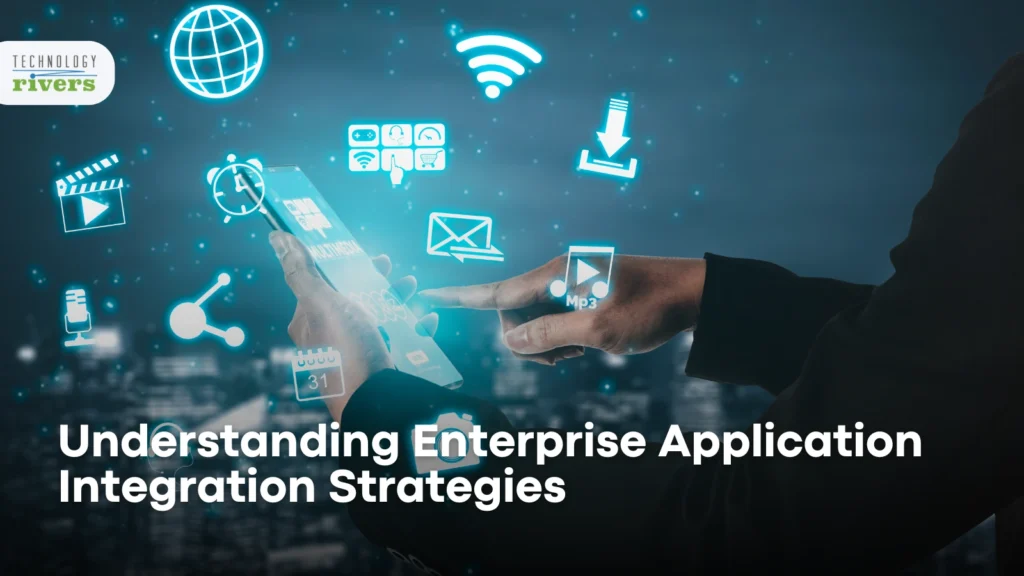
That’s where Enterprise Application Integration (EAI) comes in. EAI strategies bridge gaps between platforms, enabling smooth, secure, and real-time data sharing across systems. Whether you’re building a new healthcare app or modernizing a legacy system, mastering EAI is no longer optional—it’s essential.
In this post, we’ll unpack what EAI really means, explore real-world integration solutions, and show how the right approach can future-proof your digital infrastructure—especially in complex industries like healthcare.
The Problem: Fragmented Systems and Siloed Data
Modern healthcare organizations use dozens of software tools—EHRs, CRMs, billing platforms, scheduling systems, and more. But these applications often don’t communicate well with each other. This leads to major challenges:
- Redundant data entry: Staff waste time entering the same info across multiple platforms.
- Inconsistent patient records: One system shows an allergy, the other doesn’t.
- Delayed decision-making: Vital information is locked in the wrong place.
- Security risks: Unmonitored data transfer methods can lead to HIPAA violations.
And it’s not just healthcare. Finance, logistics, manufacturing—all face similar bottlenecks from disjointed systems.
The reality? Growth becomes harder when your digital tools don’t work together. Integration is no longer a nice-to-have—it’s the foundation for scalability, security, and customer experience.
The Solution: Enterprise Application Integration (EAI)
So, what is an EAI?
Enterprise Application Integration (EAI) is the strategic process of connecting different enterprise applications—old and new—so they can function as a unified ecosystem. It’s how data flows freely and securely, improving operations, insights, and user experience.
Let’s look at the components of a winning EAI strategy:
🔗 Seamless Data Flow with Integration Middleware
One of the core elements of EAI is middleware—software that sits between systems to enable communication.
Benefits:
- Real-time data exchange across platforms
- Reduced duplication and human error
- Standardized formats for consistent data flow
Popular middleware solutions include APIs, ESBs (Enterprise Service Buses), and iPaaS (Integration Platform as a Service) tools like Mulesoft and Zapier.
⚙️ Automation and Workflow Optimization
EAI isn’t just about connecting systems—it’s about making them smarter together.
For example:
- Auto-update patient records when a lab result is received
- Trigger billing workflows when a service is logged
- Sync customer data between a mobile app and CRM in real time
This reduces admin overhead and gives your team time to focus on what really matters—serving people.
🛡️ Security and Compliance by Design
In industries like healthcare, integration must meet strict standards. A strong EAI architecture includes:
- Encrypted data transfer
- Role-based access control
- Audit trails and activity logs
- Use of HIPAA-eligible cloud services like AWS with BAA agreements
The right EAI solution makes compliance easier, not harder.
🧱 Scalable Architecture for Long-Term Growth
An effective enterprise application integration architecture doesn’t just solve today’s problems—it prepares for tomorrow’s.
- Modular and flexible designs allow new tools to be added easily
- Microservices or APIs enable independent updates
- Cloud-native setups scale automatically with demand
This is critical for healthcare startups and growing enterprises alike.
The Impact: Why It Matters for Healthcare Tech
When you integrate systems the right way, everything changes:
✓ Faster patient care – No waiting for records or test results to sync
✓ Fewer errors – One source of truth eliminates mismatched data
✓ Better decisions – Real-time analytics across platforms
✓ Improved compliance – Built-in safeguards for HIPAA and beyond
✓ Happier teams – Less admin work, more meaningful impact
And for your bottom line? Integration drives efficiency, lowers overhead, and helps deliver better user experiences—whether your “user” is a nurse, an operations manager, or a patient using your app.
Industry Context: Why EAI is More Urgent Than Ever
The rise of AI in healthcare, telemedicine, and patient-facing apps has exploded the number of tools in use. But without integration, this innovation creates chaos.
AI models need clean, consolidated data to work well
New apps must plug into existing EHRs, CRMs, and billing tools
Regulators expect interoperability as a standard, not a luxury
Enterprise application integration solutions are now at the center of digital health strategies. If your tech stack isn’t ready, you’re not just behind—you’re at risk.
If your healthcare app or internal systems feel disconnected, it’s time to get serious about integration.
🚀 At Technology Rivers, we help healthcare and enterprise teams build scalable, secure, and integrated solutions—from app development to full EAI architecture.
Let’s future-proof your systems and unlock growth.
👉 Schedule a free strategy session to talk about your integration roadmap.