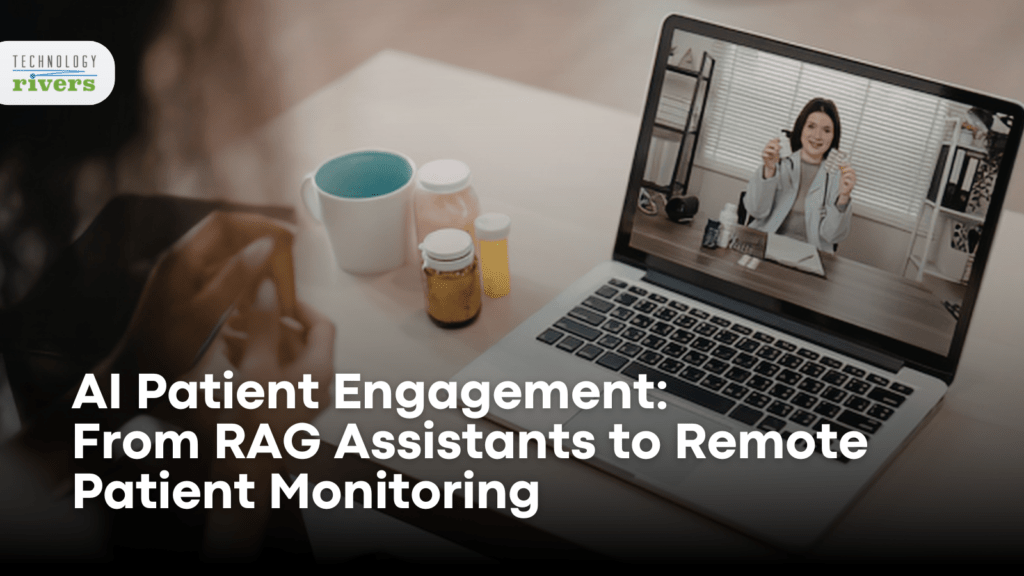
Patient engagement does not begin and end in the exam room.
Most of the patient journey happens between visits, when people are trying to remember instructions, manage symptoms, stay adherent, ask follow-up questions, and decide whether something needs attention now or later. That is where AI patient engagement is becoming more valuable. Used well, it can help healthcare teams stay present between appointments through better education, more timely communication, and smarter follow-up — without turning every patient interaction into more manual work.
But patient engagement in healthcare is different from engagement in retail or SaaS. It depends on trust, clarity, privacy, and escalation when the situation moves beyond self-service. That is why the strongest AI engagement strategies are not just chatbot projects. They combine trusted content, thoughtful workflow design, and human oversight across the patient journey.
This is where two models are becoming especially important. The first is the RAG assistant, which helps patients get more reliable answers from approved sources instead of relying only on model memory. The second is remote patient monitoring, which turns engagement into an ongoing feedback loop rather than a one-time message. Together, they show that AI patient engagement is less about novelty and more about continuity of care.
What AI Patient Engagement Means in Healthcare
AI patient engagement is the use of AI to improve how patients receive guidance, support, reminders, education, and follow-up across their care journey. That can include answering common questions, reinforcing care plans, sending relevant nudges, supporting onboarding, identifying when a patient may need outreach, and helping care teams communicate more consistently.
That definition matters because it shifts the conversation away from “Should we add a chatbot?” to “How do we help patients stay informed, supported, and connected over time?” Better engagement is not just more communication. It is more useful communication.
In practice, AI patient engagement may show up as:
- Educational assistants that explain care instructions in simpler language
- Follow-up workflows after discharge or treatment
- Symptom guidance and routing
- Medication or appointment reminders
- Remote monitoring alerts paired with patient outreach
- Personalized check-ins based on condition, risk, or behavior
Why Patient Engagement Matters More in Digital Health Products
A digital health product can be clinically promising and still fail if patients do not keep using it. Engagement affects whether patients:
- Follow through on care plans
- Respond to reminders
- Trust the information they receive
- Stay connected long enough for the product to matter
Research on patient education consistently links better health literacy and adherence with better outcomes and fewer complications, which is one reason patient-facing information quality matters so much.
This is also why patient engagement should be treated as a product and workflow challenge, not just a messaging challenge. A health app, portal, RPM platform, or AI assistant only creates value when the patient experience is clear, relevant, and easy to use. For organizations building these systems, that usually starts with strong healthcare software development.
How RAG Assistants Support Patient Education and Communication
A major weakness of generic AI assistants is that they can sound confident even when they are wrong. In healthcare, that is not a minor issue. It is a trust issue.
That is why retrieval-augmented generation (RAG) matters so much for patient engagement. Instead of answering only from the model’s internal training, a RAG system first retrieves relevant information from trusted sources — such as approved knowledge bases, care instructions, educational content, or policy documents — and then uses that retrieved material to generate a response.
For patient engagement, that makes RAG especially useful in areas like:
- Patient FAQs
- Medication and treatment education
- Discharge instructions
- Onboarding into a care program
- Post-visit support
- Chronic-condition education
The biggest advantage is not that the assistant sounds smarter. It is that the assistant can be designed to answer from approved content. That helps healthcare teams control tone, reduce hallucination risk, and keep the experience aligned with real care pathways.
RAG assistants still need guardrails. They should know when to say “I can’t answer that,” when to redirect to approved next steps, and when to escalate to a clinician or care team. In patient engagement, trust often comes as much from good boundaries as from good answers.
Remote Patient Monitoring Is an Engagement Layer, Not Just a Data Layer
Remote patient monitoring is often described as a data-collection tool. That is true, but incomplete.
RPM also creates recurring patient touchpoints. It gives healthcare teams more chances to reinforce adherence, encourage follow-through, detect drift early, and keep patients connected between visits. That makes it a powerful engagement layer, not just a monitoring layer.
That matters because patient engagement is often behavioral. Patients are more likely to stay involved when the system feels responsive, timely, and relevant to their daily experience. AI can help by:
- Identifying patterns in incoming data
- Surfacing when follow-up may be needed
- Adjusting communication based on patient behavior or risk
This is why Remote Patient Monitoring works best when it is paired with better outreach, not just better dashboards.
Where AI Adds Value Across the Patient Journey
The strongest AI patient engagement tools do not try to automate every interaction. They improve the moments where consistency, timing, and relevance matter most.
- Early in the journey, AI can support onboarding. Patients often need help understanding what a program is, how to use a device, when to check in, and what to expect next. A RAG assistant can help answer routine questions in plain language using approved content.
- During active care, AI can reinforce reminders, follow-up tasks, and care-plan adherence. That does not mean sending more messages — it means sending the right message at the right time.
- In longer-term care, especially chronic care and RPM settings, AI can help turn monitoring into meaningful engagement. It can identify when a patient has gone quiet, when behavior patterns are shifting, or when education should be reinforced.
AI can also support continuity by connecting engagement with actual health data and workflow context. That is why patient-facing systems often benefit from stronger software integrations and, in some cases, from clinical-data connectivity such as EMR integrations that support personalized care.
Risks of Weak AI Engagement Design in Healthcare
Bad patient engagement design can do more harm than no engagement at all. The key risks include:
- Low-trust output. If the assistant gives generic, shallow, or inaccurate answers, patients will stop using it — or worse, rely on it when they should not.
- Weak escalation logic. Some patient questions are informational. Others require a clinician, a nurse, or urgent guidance. If the system treats those the same way, the design is unsafe.
- Privacy and compliance gaps. Patient-facing AI systems often intersect with sensitive data, communications, and care workflows. Security, access control, logging, and content boundaries matter from day one, not after launch.
- Workflow disconnection. If the engagement tool is not connected to the care team’s actual processes, the patient may receive a polished experience that still goes nowhere operationally.
- Poor governance. Healthcare AI needs clear ownership across product, engineering, compliance, and clinical stakeholders.
Planning a Patient-Facing Healthcare Product?
Technology Rivers can help you design secure, AI-enabled engagement workflows that align patient communication, trusted content, and real care-team processes. Schedule a consultation with our team to get started.
Best Practices for Building AI Patient Engagement Tools That Patients Actually Use
- Start with one patient need, not one AI capability. Patients do not care whether a system uses RAG, summarization, or classification. They care whether it helps them understand what to do next.
- Use trusted content. Patient education, onboarding flows, and guidance tools should be grounded in approved information, not open-ended improvisation.
- Keep the language human. Patient engagement tools should sound clear and supportive, not robotic or overly clinical.
- Build escalation paths early. The system should know when to defer, when to hand off, and when not to answer.
- Connect the tool to real workflows. If the care team cannot see or act on what the patient did, the engagement layer will break down.
- Design for trust from the start. In healthcare, usability and trust are part of product quality, not polish added later.
A Practical Example: Connecting Patient Communication With Remote Monitoring
Imagine a patient enrolling in a chronic-care program that includes remote monitoring. The patient receives a device, downloads an app, and gets instructions on how to participate. In many programs, this is where confusion starts. Patients miss steps, forget expectations, or hesitate to ask questions.
Now imagine the same experience with a better AI engagement layer:
- A RAG assistant answers setup questions using approved content — explaining what the device does, how often readings are needed, and what to do if something feels off
- The RPM system detects missed readings or behavioral drift and triggers the right follow-up
- If the patient’s data or questions indicate that human action is needed, the care team is alerted and steps in
That is what strong AI patient engagement looks like in practice. It is not a bot replacing care. It is a system that makes care easier to continue between visits.
Why Technology Rivers Is a Strong Fit for AI Patient Engagement Solutions
Technology Rivers’ work in AI-enabled, HIPAA-compliant healthcare software, patient-facing digital health systems, and healthcare integrations makes it a strong fit for teams building engagement tools that need to be useful, secure, and scalable. For teams that need patient-facing AI backed by trusted content, integrations, and real healthcare product thinking, that combination matters.
Conclusion
AI patient engagement is not just about adding conversation to healthcare software. It is about helping patients stay informed, supported, and connected between visits in ways that are timely, trustworthy, and operationally meaningful.
That is why RAG assistants and remote patient monitoring fit so well together. One helps patients access grounded information and routine support. The other creates an ongoing feedback loop that makes engagement more timely and relevant. Together, they move digital health closer to continuity of care, not just digital interaction.
If you are building a patient-facing healthcare product, explore how Technology Rivers can help you create secure AI-enabled engagement workflows that connect trusted content, patient communication, and remote care experiences.