At 10:40 p.m., a healthcare founder messages the team: the demo is in four days, the patient onboarding flow is still clunky, and the audit-log story is not where it needs to be. In most software projects, that is just a late sprint. In healthcare, it is different. Every rushed shortcut can create a security gap, expose protected health information, or leave the product unprepared for real-world compliance review.
Building HIPAA-compliant healthcare apps with Cursor can help teams move faster, but only when speed is supported by secure architecture, strict PHI boundaries, and disciplined engineering review. That is exactly why we use Cursor carefully. We use it to accelerate the right parts of development, then wrap that speed in architecture reviews, cloud controls, code review, and clear PHI boundaries.
Cursor can make strong teams faster. It does not make a healthcare app compliant by itself. In healthcare, compliance lives in the system design, the development process, and the decisions your team makes every day.
Why Healthcare Teams Are Turning to Cursor
Healthcare product teams are under pressure from all sides. Founders want MVPs faster. Product leaders need shorter release cycles. Engineering teams are expected to deliver more with leaner resources. At the same time, healthcare software cannot be built with the same shortcuts common in general SaaS.
That is why tools like Cursor are getting attention. They help reduce time spent on repetitive engineering work, including scaffolding, refactoring, debugging, and writing tests. For healthtech teams, that speed can be valuable, but only when it is used inside a compliance-first workflow.
Technology Rivers sees this shift clearly in healthcare product delivery. Teams want the efficiency of AI-assisted development, but they also need the structure required for secure healthcare software.
Faster Shipping Is Not the Same as Safer Shipping
This is where many teams get it wrong. Moving faster does not automatically mean building better. In regulated software, speed without guardrails often creates technical debt in the places that matter most, including permissions, auditability, cloud security, and PHI handling.
That is why we do not treat Cursor as a shortcut around engineering discipline. We treat it as an accelerator inside a controlled process.
What Cursor Actually Helps Us Do Faster
Cursor is most useful when it removes friction from work that is repetitive but still necessary.
Scaffolding and Boilerplate
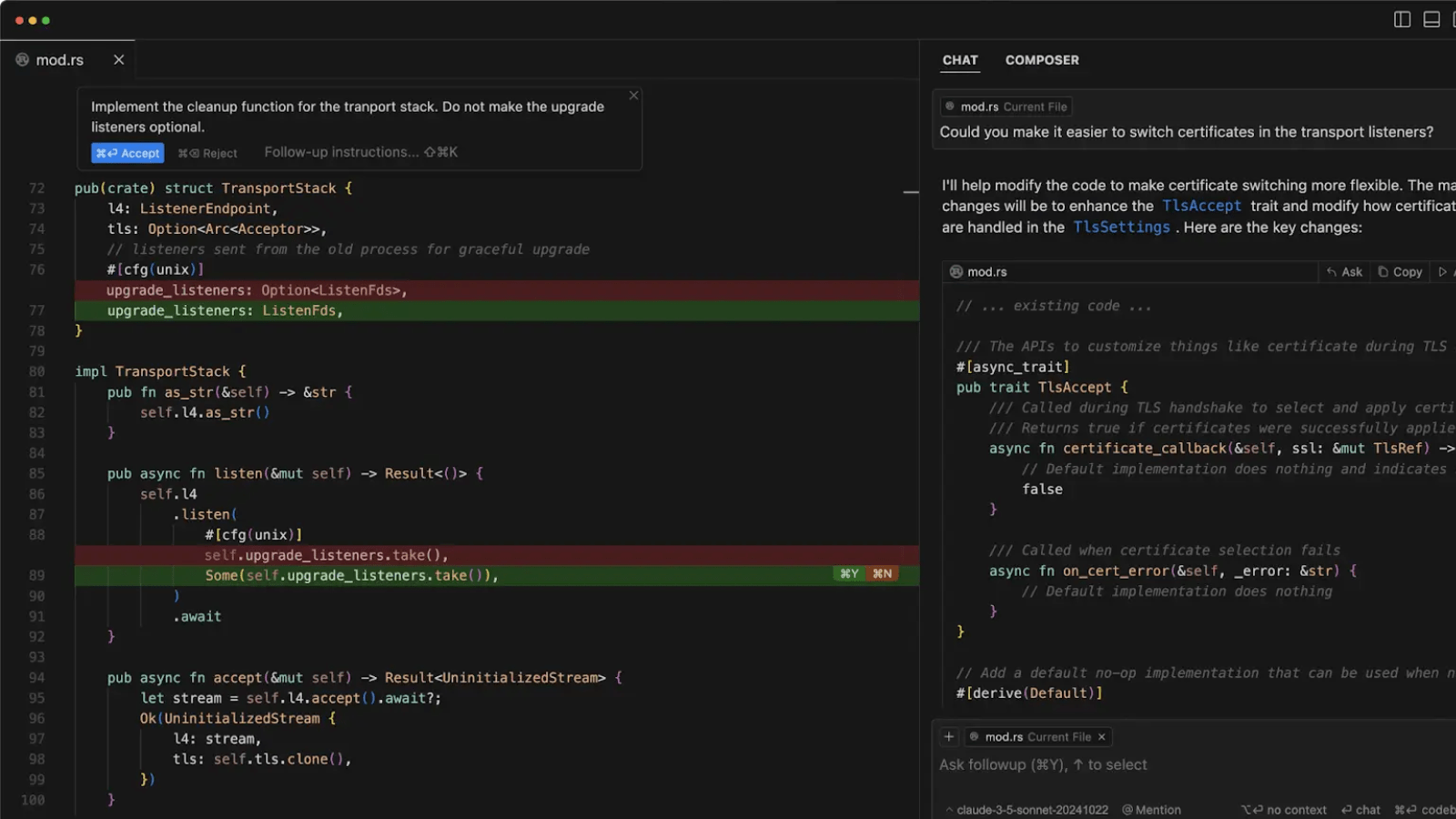
Healthcare apps require a lot of predictable engineering work. There are API routes to structure, validation layers to define, helper functions to write, and interface patterns to repeat across workflows. Cursor helps speed up those tasks so engineers can move through the mechanical work faster.
Testing and Refactoring
Clean code matters even more in healthcare, where systems evolve over time and often connect to sensitive workflows. Cursor helps generate tests, improve code readability, and speed up refactors, which supports long-term maintainability instead of just short-term output.
Internal Development Workflows
Cursor also helps with internal documentation, code explanations, and cleanup tasks that usually consume valuable engineering time. Those gains may seem small in isolation, but across a healthcare project they add up quickly.
For teams building regulated products, this kind of efficiency works best when paired with a strong delivery model like our healthcare software development services.
Why Cursor Alone Does Not Make an App HIPAA-Compliant
This is the most important point in the article.
HIPAA compliance does not come from using a specific IDE or AI coding assistant. It comes from how the full system is designed, secured, monitored, and maintained. A healthcare app must account for encryption, role-based access, audit logging, secure cloud infrastructure, vendor handling, and ongoing risk management.
Compliance Lives in the Architecture
If authentication is weak, if access controls are too broad, or if audit trails are incomplete, the app is still at risk, no matter how quickly the code was written.
That is why secure architecture has to be part of the product from day one. The same principle is covered in building HIPAA-compliant applications, where the focus is on designing compliance into the product instead of trying to patch it in later.
AI Assistance Still Needs Human Judgment
Generated code can save time, but it cannot replace human review. In healthcare, every important decision still needs engineering judgment. Teams must validate security assumptions, confirm that data flows are appropriate, and make sure generated patterns actually fit the product’s compliance requirements.
That is especially true in AI-enabled builds, which is why healthcare app development: building HIPAA-compliant AI solutions remains such a relevant topic for healthcare founders and CTOs.

Our Rules for Using Cursor in Healthcare Projects
We use Cursor inside a set of practical rules. These rules matter more than the tool itself.
We Do Not Treat Real PHI as Prompt Material
The first question is never, “Can Cursor help here?” The first question is, “What data boundary are we working inside?” If a feature touches PHI or production-sensitive workflows, we define stricter handling immediately.
That often means using synthetic or representative data instead of anything that could create unnecessary exposure.
We Separate Low-Risk and High-Risk Tasks
Cursor is useful for repetitive engineering work, but we do not use the same level of trust across every part of the product. Non-sensitive scaffolding, tests, helper functions, and admin workflows are very different from authentication, permissions, audit trails, and data retention logic.
We move faster where risk is lower. We slow down where healthcare risk is higher.
We Review Generated Code Like Any Other Critical Change
Nothing ships just because it looks correct. Generated code still goes through review for maintainability, security, and fitness for context. In healthcare, that review is even more important because hidden assumptions can create downstream compliance problems.
The Workflow We Use to Move Faster Without Compromising HIPAA
Our process is not complicated, but it is disciplined.
Step 1: Define the Data Boundary
Before we use AI-assisted development on a task, we identify whether that part of the system touches PHI, provider-facing workflows, patient records, or integration-sensitive logic. That decision shapes the rest of the workflow.
Step 2: Use Cursor Where It Creates Safe Acceleration
We use Cursor for the parts of development where speed adds value without increasing unnecessary risk. That includes repetitive backend structures, test creation, interface cleanup, and engineering support tasks.
This is one reason AI-assisted delivery is becoming so useful in modern product teams. The same broader shift is discussed in why AI-driven development is the future of MVPs for startups.
Step 3: Apply Tighter Review to Sensitive Layers
When the work involves permissions, security controls, cloud infrastructure, interoperability, or patient-facing data flows, the process becomes much stricter. These are not the places for casual speed.
Step 4: Validate Before Release
Every meaningful change still goes through review, testing, and validation. In healthcare, speed is only valuable when the resulting product is stable, secure, and production-ready.
Planning a healthcare app? Our team can help you architect it securely from day one. Speak to our experts today.
Where This Approach Creates Real Value
The real benefit of Cursor is not that it writes code faster. The real benefit is that it gives experienced teams more room to focus on the decisions that matter most.
More Time for Architecture and Security Thinking
When repetitive work is accelerated, senior engineers can spend more energy on system design, cloud decisions, auditability, integrations, and product reliability. That improves both delivery speed and product quality.
Better Momentum Without Reckless Shortcuts
Healthcare teams often lose momentum because every small task takes longer than expected. Cursor helps reduce that drag. But the point is not to move recklessly. The point is to create speed where it is safe, then preserve discipline where it matters most.
Stronger AI Use Inside Safer Boundaries
Healthcare teams are also thinking more seriously about how AI should be used across product development. That is why safe innovation in healthcare AI is so relevant. The smartest teams are not just adopting AI. They are defining where it belongs and where stronger controls must stay in place.
A Practical Example of This in Healthcare Product Development
A strong example is the remote patient monitoring app we built. RPM products often include dashboards, alerts, device integrations, patient readings, and provider workflows. There is a lot of engineering work that benefits from faster execution. There is also a lot that cannot be handled casually.
Cursor can help accelerate the repetitive layers of a product like this. But the product still depends on secure data handling, reliable access control, and cloud architecture that supports HIPAA realities from the start.
That is why the remote patient monitoring case study is a useful example. It reflects the kind of healthcare build where speed matters, but safe system design matters more.
Why the Right Development Partner Matters
Tools do not build healthcare products by themselves. Teams do. And in regulated software, the team’s judgment matters more than the toolchain.
A healthcare-focused development partner understands that faster delivery is only meaningful when it leads to a product that can survive real-world use, stakeholder scrutiny, and future scale. The goal is not just to generate code quickly. The goal is to build software that is secure, maintainable, and ready for the realities of healthcare operations.
That is also why aligned topic expertise matters. Healthcare teams evaluating this space should not just look for a vendor that uses AI tools. They should look for one that understands how AI-assisted delivery fits into compliance-focused software execution.
One Client Perspective That Matches This Approach
One testimonial fits this topic especially well. Gorkem Sevinc of Milemarker said Technology Rivers helped build “HIPAA and HITECH-compliant applications” that did not just check boxes, but were built for best practices, while also helping the team accelerate development and extend capacity when needed. That is the balance healthcare teams are actually looking for.
Build Faster, but Build Like Healthcare Depends on It
Cursor is useful because it reduces friction. It helps teams move through repetitive engineering work faster and with less drag. But in healthcare, that speed only creates value when it sits inside a disciplined, compliance-aware process.
That is how we use it. We let Cursor speed up the right work. We keep PHI boundaries clear. We review what matters. We treat architecture as the foundation of compliance, not an afterthought.
The result is not just faster coding. It is faster progress toward software that is actually ready for healthcare use.
If you are building a healthcare product and need a team that understands both AI-assisted development and regulated software delivery, schedule a secure architecture consultation.