Blogs » How To Build a Successful Product Strategy in 7 Steps
81% of digitally mature organizations believe innovation is their secret sauce to success. Groundbreaking innovation starts with spectacular products. And every great product begins with a strong product strategy. In other words, your product strategy is a gateway to successful business goals, liquidity, and innovation at scale. Unfortunately, few organizations leverage product strategies correctly.
According to Harvard, 95% of products fail. The simple truth is: that building successful products is hard. The goal of any product strategy is to increase your chances of success by making customer-centric products that are value-focused and achievable within a set budget. But why do so many fail?
Today, let’s look at how we reduce failure rates, improve performance, and create more valuable products with our seven-step product strategy.
What is Product Strategy?
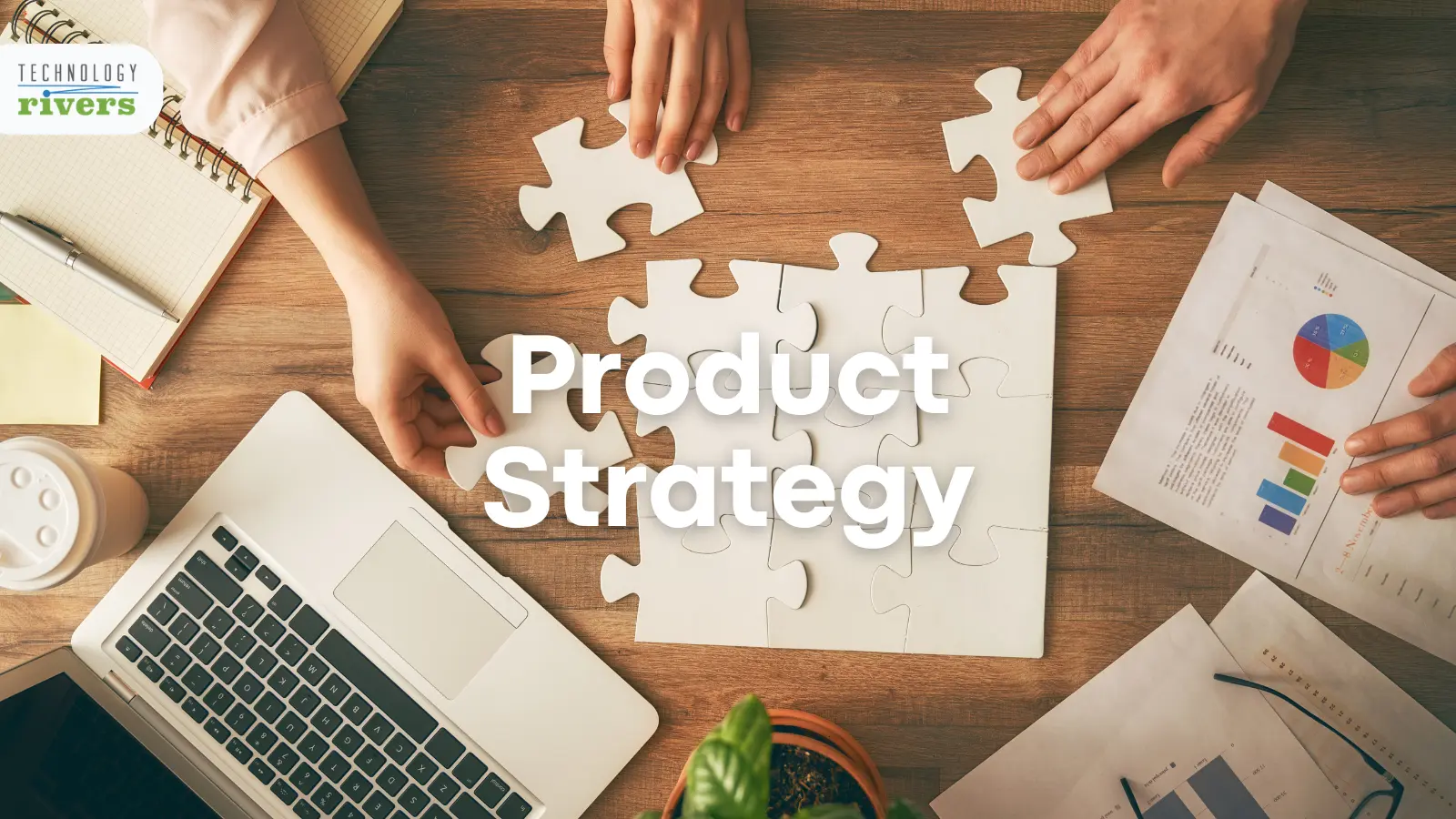
To keep things simple, a product strategy is a high-level plan for your future products. Product strategies start with a vision statement and end with growth strategies and minimum valuable products (MVPs). The overall goal of a product strategy is to ideate a product, generate requirements, iterate steps, and elicit feedback from customers. At the end of your product strategy, you should be ready to build, test, and deploy.
Depending upon the type of your project, we may dig deeper into the strategy to move to address specific areas like:
- Cloud strategy – Decide if using the cloud is right for your business and pick the best cloud provider.
- Mobile strategy – Choose the important features and services for your mobile app, decide which platform to launch on first, and figure out if a native or hybrid app is better.
- Growth strategy – Solve challenges like getting your first users and find effective ways to help your app grow.
- AI strategy – Explore how AI can make your product smarter by improving user experience, automating tasks, and offering personalized content, and decide on the best way to add AI tools that fit your product’s needs.
At Technology Rivers, we organize our product strategy into seven distinct stages:
Let us discuss each of them one by one.
1. Visioning
A product vision is a statement that describes the purpose of the product and what customer problems it intends to solve. That latter part is incredibly important. 42% of failed startups never solved a customer problem. When building a project, it’s common to seek praise. We want our ideas to be reinforced, and we want positive attention for our hard work. But if you’re only feeding positivity into your product vision, you’re going to run into problems.
The goal of a product vision is to erase your assumptions. It isn’t about how technically advanced your product is or how amazing your product sounds on paper. Your goal is to figure out what your product really is and how it’s going to solve customer issues in a tangible way.
2. Strategy
When you’re building your product strategy, there are a few key areas you need to focus on:
- Your market: Who’s going to buy your product? What’s their journey from finding out about your product to actually making a purchase? Before you start building, it’s important to know exactly who you’re targeting and what they’re looking for.
- Your competitors: What does the competition look like? Are there similar products out there? Figure out what makes your product different and better. Use those strengths to your advantage when developing your product.
- Your goals: Setting goals is crucial. Make sure they’re clear, measurable, and time-bound. Track your progress and be ready to tweak your goals as you go along.
- Mobile strategy: Think about how your product will work on mobile devices. Decide on the key features and whether you should go with a native app or a hybrid one.
- Cloud strategy: Decide where your product will live—on-premise, in the cloud, or maybe a mix of both. Look at top cloud providers like AWS, Azure, and Google Cloud to see what works best for you.
- AI strategy: Consider how AI can make your product better. Maybe it can enhance user experience, automate tasks, or offer personalized content. Choose AI tools that fit well with what you’re trying to achieve.
- Security and compliance strategy: Don’t forget about security and compliance. Make sure your product meets all the necessary regulations like GDPR, HIPAA, and PCI, so your users’ data stays safe and you stay on the right side of the law.
3. Scoping
The product scope is all the features and characteristics that make up your product. Obviously, your product scope doesn’t have to refer to tangible goods. SaaS deliveries have product scopes. This phase should address how the product is made, what resources you need to produce or build it, and what types of future iterations could improve your product offering. For apps, product scopes define the responsibilities of those building the app, those administering the app, and those utilizing the app (if it’s an internal business tool.)
During the scoping stage, you need to figure out how to build on the value-driving components of your app. All of the product strategies you laid out in the second phase should assist you in determining what needs to be emphasized in the future.
4. Roadmap
Product roadmaps are high-level visual outlines that define the short-term and long-term goals of your product. The product roadmap has two goals:
- To define which steps you need to take next during the product development lifecycle
- To explain why each step is necessary and the desired outcomes of those steps
Generally, product roadmaps are used across teams. Your sales and marketing team will utilize the roadmap to create deliverables and convert leads. Your project team will use the roadmap to build out your product. And your C-level will use the roadmap to understand the value of your product across each future iteration.
5. Growth
How are you going to grow? Most products fail at the growth stage. Innovation chambers like to call scale the “valley of death” for a reason: it’s the single most difficult stage. It’s one thing to put out a product that generates interest. It’s another thing to put out a product that can scale up to viability. As your planning growth, you need to be able to answer the following questions:
- What are your high-level goals?
- What future iterations will bring value to your product?
- What inputs and outputs will increase your scale?
- What types of experimentation should you apply to those inputs and outputs?
- How can you increase your products’ market appeal within a set budget?
6. Architecture
The architecture of your product is like its blueprint — it’s crucial for making sure everything works well together. Without a solid plan, your product might struggle to grow, stay secure, or be easy to maintain, all of which are key to its success.
In this stage, you’ll make important decisions about the technologies that will power your product, like which programming languages and databases to use. You’ll also figure out how different parts—like user interfaces and data storage — will connect and work together. These choices aren’t just about technology; they’re about setting up your product to grow and change over time.
You’ll also decide where your product will run — on your own servers, in the cloud, or both. Unlike focusing only on mobile apps or cloud services, a good architectural plan looks at the whole system to make sure it works well everywhere.
A strong architecture is essential. It’s the foundation that supports your product’s success, helping it meet goals like staying secure, growing with your needs, and being easy to manage. By getting the architecture right from the start, you’re setting your product up for long-term success.
7. MVP
Now that you’ve laid the foundation with all these strategies, it’s time to bring your ideas to life with a minimum viable product (MVP). The MVP is the first complete version of your product, with just enough features to function and get feedback from real users. Before you get to the MVP, you might start with a simple Initial Version—a basic prototype to test your key ideas. As you learn from this, you’ll move into the Product Build Out phase, where you add features and refine what you’ve built.
The goal is to get your MVP in front of customers as soon as possible. This way, you can gather feedback quickly and make changes based on what your users actually need. By focusing on customer feedback from the start, you’ll reduce the chances of costly mistakes down the road.
Do You Need a Best-in-Class Product Strategy?
At Technology Rivers, we specialize in helping businesses turn ideas into exceptional products. Our product strategy service guides you through each step, ensuring your strategy is detailed, practical, and aligned with your goals.
Once your strategy is ready, we’ll work with you to bring your product to life, handling everything from development to launch. Ready to get started? Contact us today to see how we can help you succeed