Why HIPAA Compliance Matters in Software Development
No company wants to make headlines for a healthcare data breach. Yet in 2024, 275 million patient records were exposed due to security failures that could have been prevented (HIPAA Journal). The fallout? Massive fines, legal headaches, and broken trust — a reputation hit that’s nearly impossible to recover from.
If your software handles Protected Health Information (PHI), HIPAA compliance isn’t just a regulation — it’s a requirement for security and credibility. It safeguards patient data, fortifies cybersecurity, and reassures users that their information is in safe hands.
In this guide, we’ll break down:
✔ The core HIPAA rules every developer must follow
✔ Best practices for building secure, compliant applications
✔ Common compliance pitfalls — and how to avoid them
Let’s get started.
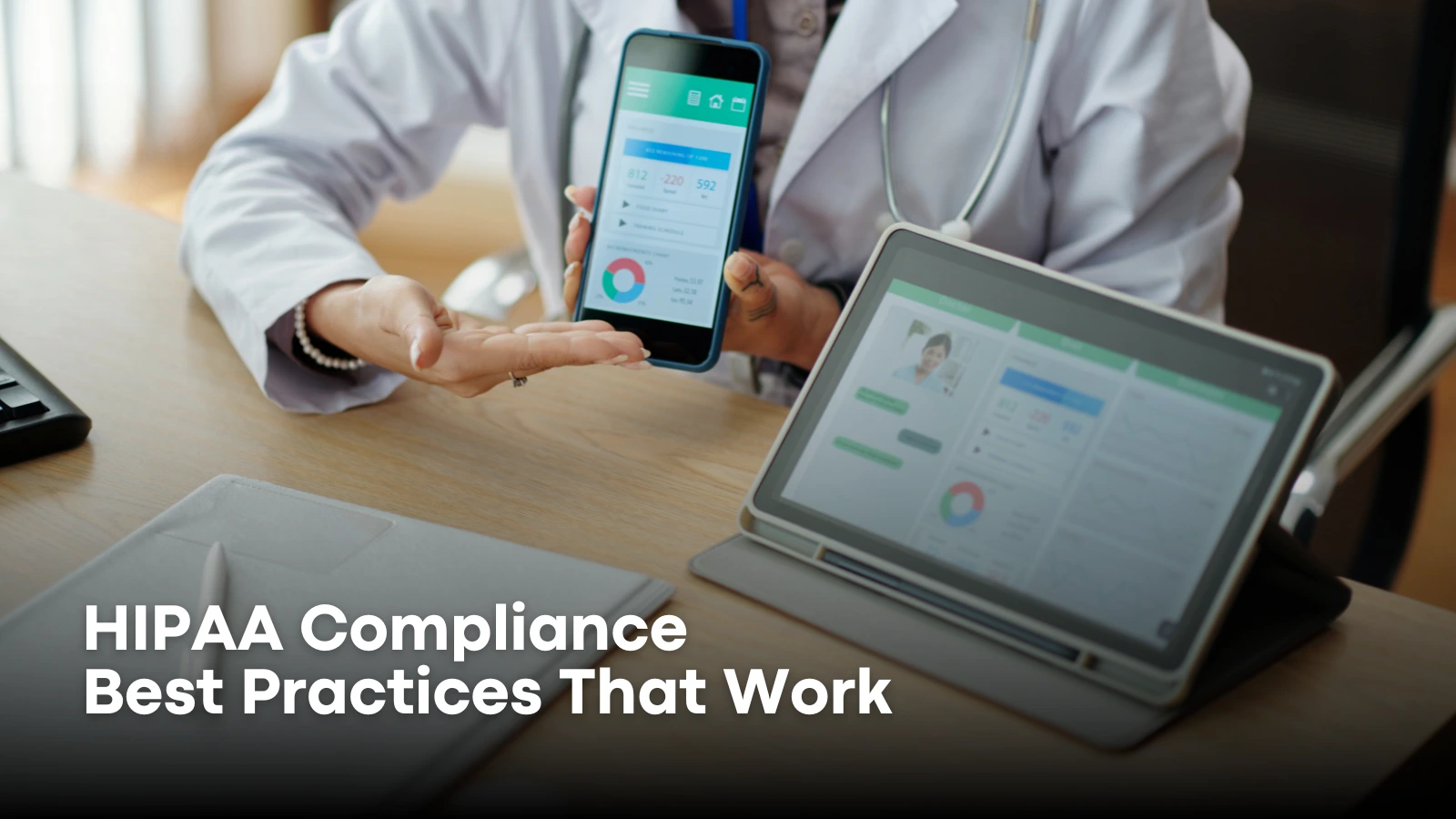
HIPAA Compliance for Software Development: Best Practices That Work
Building a HIPAA-compliant application isn’t just about checking boxes — it requires a proactive approach to security and risk management. Here’s what every development team needs to prioritize.
1. Understand the Four Core HIPAA Rules
Before writing a single line of code, your team must understand these four key regulations: the Privacy Rule, which governs who can access, use, and share patient data; the Security Rule, which requires safeguards to protect electronic PHI (ePHI); the Breach Notification Rule, which mandates timely reporting of security breaches; and the Omnibus Rule, which extends HIPAA regulations to business associates and vendors.
Skipping this step leads to costly mistakes — HIPAA training should be mandatory for your team.
2. Conduct Regular HIPAA Risk Assessments
Security risks evolve. In fact, 85% of healthcare breaches could have been prevented with better encryption and access control. Regular assessments should evaluate your encryption standards, data storage security, authentication processes, and compliance with audit logging and monitoring requirements. If any of these areas fall short, your software is at risk.
3. Encrypt and Secure PHI
Encryption is non-negotiable. All PHI must be encrypted in transit and at rest using AES-256 or stronger. For storage, use a HIPAA-compliant cloud service such as AWS, Google Cloud, or Azure — but only with a signed Business Associate Agreement (BAA) in place.
4. Enforce Role-Based Access Control (RBAC)
Not everyone needs access to PHI. Limit exposure by restricting access based on user roles, requiring multi-factor authentication (MFA), and applying the principle of least privilege. These measures reduce the risk of unauthorized access and data breaches.
5. Maintain Continuous Audit Logging and Real-Time Monitoring
One missed security event can trigger a major breach. Implement automated logging tools to detect unusual activity, real-time monitoring to flag potential threats, and tamper-proof audit trails to ensure compliance during audits. Without continuous monitoring, small vulnerabilities can turn into costly violations.
6. Secure Third-Party Vendors with a Strong BAA
If a third-party vendor mishandles PHI, your company is still responsible. A Business Associate Agreement (BAA) ensures vendors follow strict security requirements, clearly defines data-handling responsibilities, and protects your company from legal liability. Never work with a vendor handling PHI without a signed BAA.
7. Conduct Ongoing Security Testing and Compliance Audits
HIPAA compliance isn’t a one-time achievement — it’s an ongoing process. Schedule quarterly penetration testing, annual security audits, and regular employee training to stay ahead of evolving threats. A system that was compliant six months ago might not be today, so continuous evaluation is critical.

HIPAA Compliance Challenges (and How to Solve Them)
Even with best practices in place, staying HIPAA-compliant is easier said than done. Complex regulations, usability trade-offs, and third-party risks can derail even the most secure systems. Here’s how to navigate the most common roadblocks.
Challenge 1: Making Sense of HIPAA’s Complex Regulations
HIPAA’s legal jargon and evolving guidelines make compliance tricky — especially for development teams without a legal background. Many companies struggle to interpret the rules, leading to costly missteps and gaps in security.
How to Fix It:
- Train developers, product managers, and security teams on HIPAA best practices.
- Consult compliance experts who can clarify requirements and identify risks.
- Use a HIPAA compliance checklist to break regulations into clear, actionable steps.
Challenge 2: Balancing Security and Usability
Tighter security can frustrate users. Mayo Clinic saw a 15% drop in patient logins after implementing two-factor authentication (2FA). Overly strict access controls can lead to poor adoption or risky workarounds.
How to Fix It:
- Use biometric authentication (fingerprint, facial recognition) for frictionless logins.
- Implement adaptive authentication—requiring extra security only for high-risk actions.
- Design user flows that prioritize both security and ease of access

Challenge 3: Managing Third-Party Compliance Risks
Your compliance is only as strong as your weakest vendor. If a third-party provider mishandles PHI, your company is still liable. Many businesses fail to enforce vendor security, leading to avoidable breaches.
How to Fix It:
- Work only with HIPAA-compliant service providers.
- Require a Business Associate Agreement (BAA) that clearly outlines security responsibilities.
- Perform annual compliance checks to ensure third parties keep up with regulations.
Challenge 4: Keeping Up with Continuous Compliance
Compliance isn’t a one-time event. Security threats evolve, regulations change, and yesterday’s safeguards might not meet today’s standards. Without proactive monitoring, even previously compliant apps can fall behind.
How to Fix It:
- Automate compliance monitoring with tools that scan for vulnerabilities in real time.
- Conduct quarterly penetration testing and annual security audits.
- Stay ahead of regulatory updates by subscribing to HIPAA news and industry alerts.
HIPAA compliance is an ongoing commitment, but with the right approach, you can protect patient data, minimize legal risks, and build trust with users — without sacrificing functionality.

Stay Compliant, Stay Secure: Next Steps for Your App
HIPAA compliance isn’t a one-and-done task — it’s an ongoing commitment to security, trust, and risk management. Staying ahead means proactively addressing vulnerabilities, monitoring compliance, and adapting to evolving regulations. The good news? You don’t have to do it alone.
Want to make sure your app meets HIPAA standards without costly missteps?
Download our HIPAA compliance checklist – A step-by-step guide to securing patient data and avoiding regulatory pitfalls.
Talk to our HIPAA compliance experts – Get personalized guidance to navigate regulations and ensure your app stays compliant.
Security and compliance aren’t optional — they’re the foundation of a trusted, high-performing application. Take the next step today.