The future of healthcare extends beyond medications or surgical methods; it centers on smart data-informed decision processes. Within this transformation two advanced AI models—Retrieval-Augmented Generation (RAG) and Agentic AI—are proving to be transformative. Surpassing automation these technologies offer doctors tailored, evidence-supported recommendations and efficiently handle intricate workflows heralding a significant enhancement, in the quality, safety and accessibility of patient care.
For hospitals and healthcare organizations incorporating these AI models necessitates collaborating with expert AI software development firms skilled in creating HIPAA-compliant software solutions. Such strategic investments are crucial, to turning AI capabilities into dependable practical clinical applications.
RAG: The Engine of Evidence-Based Medicine
Within the healthcare industry reliability and precision are essential. Conventional Generative AI models although articulate frequently suffer from “hallucinations”—producing invented data. Such a risk is intolerable, in environments. Retrieval-Augmented Generation (RAG) offers a remedy in this context.
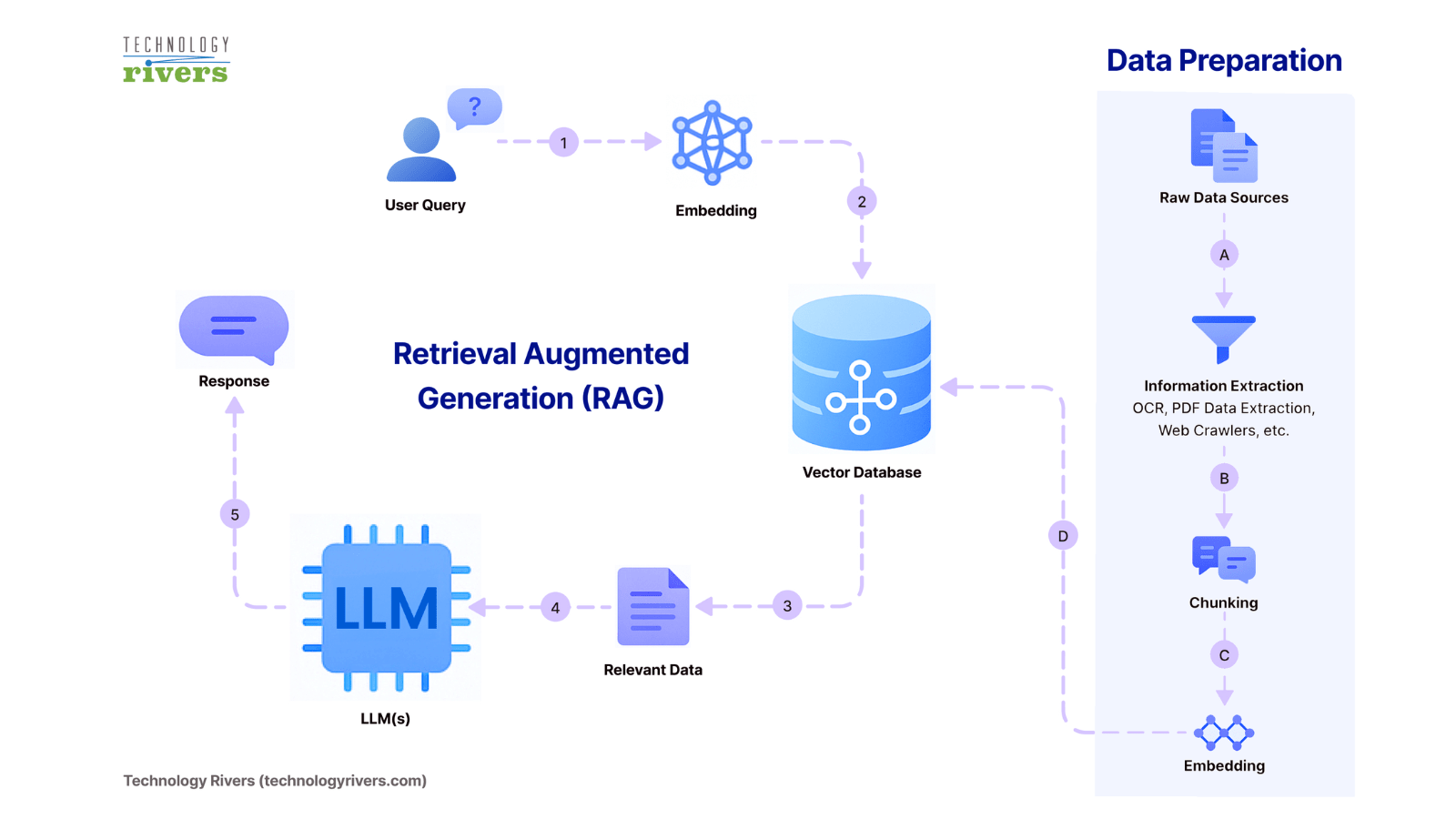
RAG operates by connecting a Large Language Model (LLM) to a trustworthy and continuously refreshed knowledge source. Prior to producing a reply, the “Retriever” unit extracts the pertinent documents—from a patients Electronic Health Record (EHR) to the latest clinical trial findings or internal hospital protocols. The LLM then utilizes this authenticated, up-, to-date information to create a well-founded response.
Impact of RAG on Clinical Practice
- Enhanced Precision and Security: RAG limits the AIs responses to authenticated information significantly lowering the chance of producing medical advice. It is capable of incorporating drug databases or updated treatment protocols (such, as recent cancer trial results) reducing the risk of dangerous medication mistakes.
- Up-to-Date Evidence-Driven Knowledge: Unlike AI systems limited by fixed knowledge cutoff points RAG can continually retrieve the journal articles guaranteeing that clinical decision-making support utilizes the most recent evidence-backed information. This is vital for evolving areas such, as oncology or infectious disease.
- Transparency and Confidence: Importantly RAG offers a reference, for each suggestion. When a healthcare provider requests a treatment plan the system can reference the clinical guideline or patient file it consulted enabling validation and fostering vital trust in the AI system.
By providing physicians and nurses with access, to tailored research-supported data RAG-driven systems improve the accuracy and trustworthiness of clinical decision support.
Agentic AI: The Autonomous Assistant
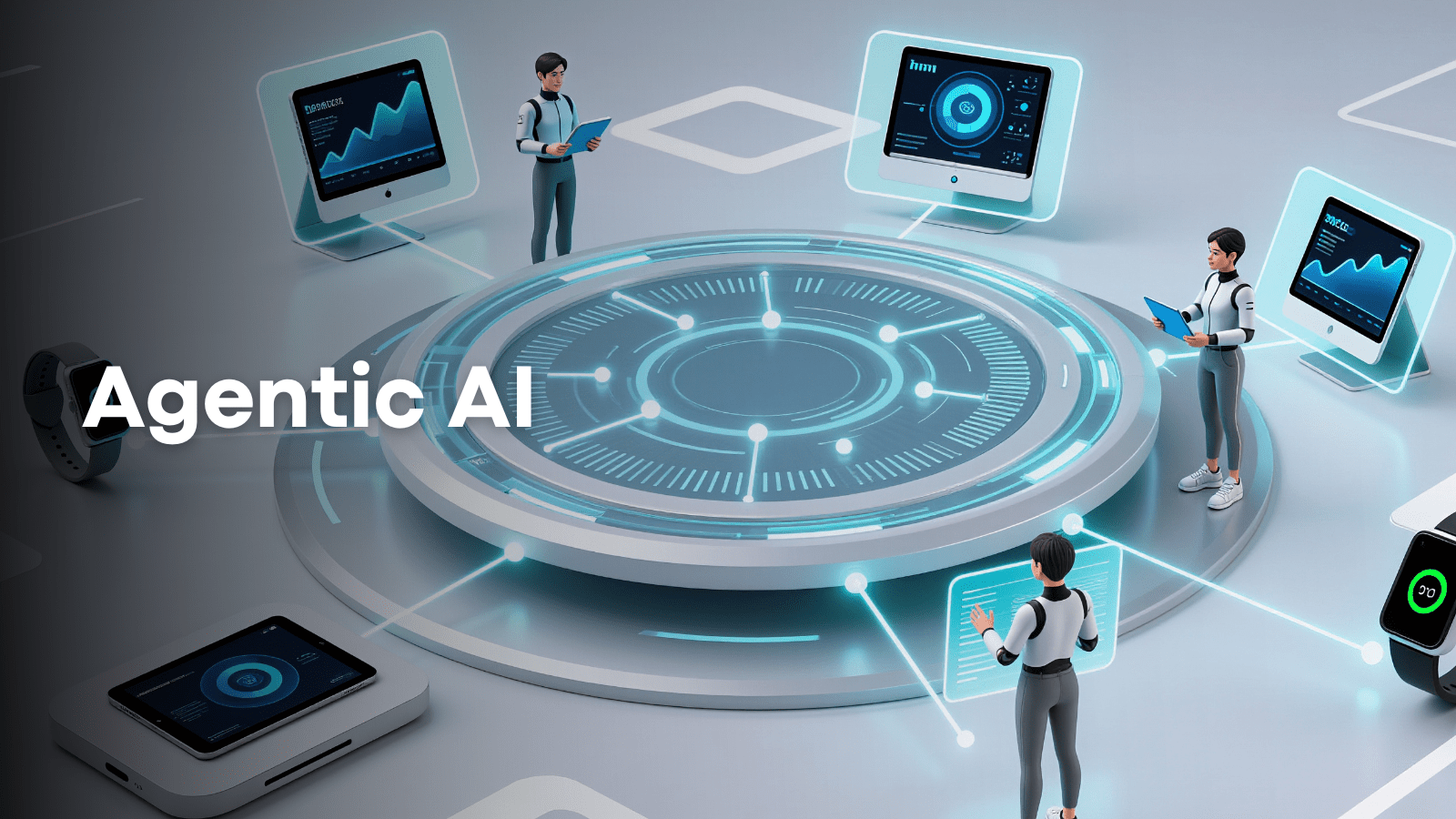
Although RAG is outstanding, at delivering well-informed answers Agentic AI systems signify the next advancement: possessing the capacity to reason strategize and independently carry out multi-step tasks aimed at a specific objective. An AI agent isn’t merely an instrument; it is an active digital being functioning like a highly skilled medical aide.
An agentic system functions via a loop: Perceive (gathering information, from the environment/EHR) Reason (interpreting data and devising a plan) Plan (dividing the objective into tasks) and Act (carrying out a physical or digital operation typically employing external tools).
Agentic AI in Action: Transforming Workflows
Hyper-Personalized Treatment Planning
Conventional clinical decision support tends to be reactive. In contrast an Agentic AI can actively evaluate a patient’s data set—genomic information, laboratory findings, lifestyle details and medication records—and compare it against worldwide treatment guidelines. The agent is then capable of automatically:
Draft a personalized treatment pathway
Flag potential drug-drug or drug-gene interactions. Adjust medication dosages in real-time based on continuous monitoring data from wearables. The agent not recommends but also begins the development of a tailored adaptive care plan.
Proactive Patient Monitoring and Triage
Agentic AI has the capability to constantly observe data from ICU monitors or remote patient monitoring (RPM) tools. When the agent identifies a pattern—such as a gradual yet consistent decrease in a post-surgical patients blood pressure alongside an increase, in heart rate—it can autonomously:
- Alert the specific care team member (e.g., the charge nurse or covering physician).
- Draft an initial clinical note summarizing the change and suggested intervention.
- Request a pre-authorized diagnostic test prior, to the clinician reviewing the alert greatly shortening the time to intervention.
Operational Automation
Healthcare professionals face an administrative load. Agentic AI has the potential to optimize -clinical processes allowing clinicians to focus more on patient care directly:
- Automated Scheduling: Agents have the ability to handle physician timetables, arrange appointments verify the availability of necessary equipment and dispatch customized reminders to patients.
- Clinical Documentation: An agent has the capability to listen to a physician-patient conversation extract the points and automatically create a preliminary version of the SOAP (Subjective, Objective, Assessment, Plan) note significantly cutting down on documentation time.
The Synergy: Agentic RAG
The genuine strength resides in combining these two ideas: RAG. This represents a self-governing agent that employs RAG as its knowledge system.
An Agentic RAG framework not fetches documents but also evaluates what details are necessary obtains them safely compiles a response customized to the particular patients situation and subsequently takes action. For example:-
- Question: “What is the advised subsequent action, for X?”
Agentic RAG Process:
- Observe: Reviews patient Xs EHR, highlights laboratory results and recognizes the long-term illness.
- Retrieve (RAG): Looks up the current clinical guidelines for the particular condition extracting only the portion pertinent, to patients exhibiting the flagged lab values.
- Reason/Plan: Concludes that the existing medication requires a dosage modification and a follow-up test should be scheduled in two weeks.
- Act: Prepares the medication dosage adjustment order. Automatically arranges the subsequent test, in the hospital system.
This collaboration enables decision-making alongside proactive operational effectiveness forming a smooth smart layer, atop the current healthcare framework.
Building the Future: Compliance and Development
Deploying RAG and Agentic AI within an environment is more than just straightforward programming; it constitutes a focused task in the development of regulated medical software. The primary difficulties center on security, data accuracy and adherence, to regulations.
The Role of Specialized Development Partners
Healthcare systems need to work alongside healthcare custom software development partners, particularly those acknowledged as Best AI software development companies, in USA who have proficiency in:
- HIPAA Compliance and Safety: Any AI system dealing with Protected Health Information (PHI) needs to be developed using a compliant software framework from the start. This involves data management, full encryption throughout, strong access restrictions and a transparent audit log, for each AI-driven decision.
- Interoperability: Emerging AI agents need to connect with current frequently isolated, legacy systems such as Electronic Health Records (EHR) and Picture Archiving and Communication Systems (PACS). Expertise in healthcare technology software development is essential for utilizing standards, like HL7 and FHIR to guarantee data exchange.
- Digital Health Application Creation: To develop patient-oriented apps top digital health app developers are essential to design user-human-focused interfaces that simplify complex AI insights, for patients enabling them to comprehend and respond effectively as seen in remote monitoring or virtual assistant tools.
The effective implementation of RAG and Agentic AI depends on partnering with AI software development firms that combine technical expertise with a thorough essential comprehension of the clinical field and its stringent regulatory environment.
The Path Ahead
RAG and Agentic AI represent more than incremental advancements; they constitute fundamental transformations in the utilization of clinical knowledge and the provision of care. These technologies aim to address the challenges confronting contemporary healthcare: overwhelming cognitive demands on providers and the requirement, for genuinely individualized patient experiences. Emphasizing secure, compliant and integrated development of these systems will enable the healthcare sector to initiate a new era marked by unparalleled safety, efficiency, and superior patient care.
Frequently Asked Questions (FAQs)
1. What is the fundamental difference between RAG and Agentic AI?
RAG (Retrieval-Augmented Generation) serves as a method for grounding knowledge. It guarantees the AIs output is precise by fetching data from an outside knowledge source (such, as an EHR or a clinical database) and employing it to produce an accurate response. Agentic AI refers to an entity created to observe reason strategize and carry out multiple steps to achieve a particular objective frequently leveraging RAG as one of its resources. RAG provides information; the Agent takes action.
2. In what way does RAG minimize the occurrence of AI “hallucinations”, within a healthcare setting?
AI hallucinations happen when a large language model (LLM) produces yet believable content relying only on its training data. RAG addresses this issue by requiring the LLM to base its answer on external verifiable records or data (such, as the most recent guidelines or a patient’s medical record). If the details are missing from the accessed documents the RAG-enabled system is intended to avoid making the statement thereby greatly enhancing correctness.
3. What are the key use cases for Agentic AI in a hospital setting?
Primary applications encompass automated management of workflows (such, as organizing surgical timetables overseeing resource distribution) proactive surveillance of patients (interpreting live vital data from ICU or wearable devices and independently issuing alerts/pre-orders) and highly personalized healthcare (creating tailored multi-dimensional treatment strategies).
4. Why is HIPAA compliance crucial for RAG and Agentic AI development in healthcare?
HIPAA (Health Insurance Portability and Accountability Act) adherence is essential since RAG and Agentic AI platforms frequently manage and process Protected Health Information (PHI) obtained from sources such as EHRs. Any company developing software for these systems needs to enforce rigorous security protocols—such, as data encryption, access restrictions and audit logs—to safeguard patient confidentiality as failure to comply may lead to harsh penalties and diminished patient trust.
5. Is AI capable of substituting human physicians?
No. Agentic AI is intended to serve as a decision support system and independent assistant rather than substituting human healthcare professionals. Its main function is to manage data- duties streamline administrative workload identify significant risks and deliver evidence-based insights quickly. This allows physicians and nurses to concentrate on decision processes engage directly with patients and offer empathetic care.
6. What qualifications should I seek in AI software development firms specializing in healthcare?
Seek a firm with a history in creating bespoke healthcare software particularly specializing in HIPAA-compliant solutions. The company should show proficiency in cutting-edge AI models (RAG, LLMs) have a background, in connecting with existing EHR platforms (ensuring interoperability through FHIR/HL7) and have a grasp of clinical processes often ensured by including medical domain specialists within their team.
7. In what ways does Agentic AI enhance efficiency within a healthcare organization?
By handling multi-stage administrative duties—such as scheduling appointment times automating billing workflows drafting preliminary clinical records and overseeing inventory of resources—Agentic AI greatly diminishes the administrative burden on staff. This results, in decreased burnout reduced operational expenses. Enables clinicians to devote more time to direct patient interaction.
8. What is the role of digital health app developers in this AI evolution?
Digital health app developers are crucial for creating the user-friendly interfaces (UIs) that make these complex AI systems accessible. They build the patient portals and mobile apps that enable remote patient monitoring (RPM) and virtual assistants. Their expertise ensures that the powerful, compliant AI insights developed by healthcare technology software development teams are delivered to both clinicians and patients in an intuitive, engaging, and trustworthy manner.