The pressure is real. McKinsey’s 2025 global survey found that 88% of organizations report regular AI use in at least one business function, yet only about one-third have begun scaling AI at the enterprise level, which shows how hard it is to move from pilots to operational impact.
What Are AI Automation Solutions?
AI automation solutions are systems that combine workflow automation with artificial intelligence to handle tasks that are repetitive, data-heavy, or dependent on judgment. Instead of only following fixed if-then rules, these systems can classify information, extract meaning from documents, summarize context, recommend next actions, and trigger the right workflow step automatically.
At the enterprise level, this usually means connecting business systems, such as CRM, ERP, help desk, document management, and internal databases, to automate work across departments rather than inside one isolated tool. That is where AI workflow automation becomes more valuable than simple task automation.
Traditional business process automation is useful for predictable, rules-based flows. It works well when the logic is stable and the inputs are structured. AI automation solutions go further. They help when workflows involve unstructured data, changing inputs, exceptions, and decisions that normally require human review.
A simple way to think about it is this:
- Rules-based automation moves work based on predefined logic.
- AI-assisted automation helps interpret content, prioritize tasks, or generate outputs inside a workflow.
- Agentic automation can take multi-step actions across systems, with goals, context, and guardrails.
In practice, enterprises use AI automation solutions for work like document intake, ticket triage, approval routing, customer support workflows, compliance reviews, report generation, and operational handoffs between teams. The goal is not to replace every human decision. The goal is to remove manual bottlenecks, improve consistency, and let teams focus on higher-value work.
This distinction also matters when evaluating solutions. Many companies think they need an AI agent when a well-designed workflow automation system would solve the problem faster. Others rely on basic automation when their real bottleneck is unstructured data or exception handling. The right choice depends on the workflow itself, not the popularity of the tool.
For enterprises planning long-term automation, the best approach is to start by understanding what kind of work is actually being done, what systems are involved, and where AI adds measurable value. That is the foundation for scaling automation intelligently.

Why Enterprises Are Investing in AI Workflow Automation
The old scaling model breaks down as organizations grow. Approvals multiply, exception handling slows, and teams spend more time moving information between systems than acting on it. The result is not just inefficiency. It is delayed decisions, inconsistent execution, and rising operational costs.
Workflow redesign matters as much as the AI itself. McKinsey’s 2025 global AI survey found that organizations generating stronger value from AI are making structural changes such as redesigning workflows and assigning senior leaders to oversee AI governance rather than treating AI as a standalone experiment. Value comes from changing how work moves, not just from adding a model or assistant.
Enterprises typically invest in AI automation for five reasons:
- Reduce cycle time in high-friction workflows
- Fewer manual errors and less rework
- Less employee time spent on routing, searching, summarizing, and status chasing
- Better service levels across customer, operations, and compliance processes
- Automation that can adapt when workflows involve exceptions, documents, or judgment where basic rules-based systems often fail
The conversation has shifted from simple task automation to enterprise workflow automation. Leaders are no longer asking only, “What can AI do?” They are asking:
- Which workflows should we redesign first?
- What outcomes can we measure?
- How do we scale without creating governance problems?
These are the questions that separate pilot-stage AI from real operational transformation.
For companies planning larger transformation efforts, workflow process automation and AI and machine learning services are often the foundation for building scalable automation systems.
Common Enterprise Use Cases for AI Automation Solutions at Scale
The best enterprise use cases are high-volume workflows with delays, repetitive decisions, and too many handoffs. That usually includes operations, customer support, finance, HR, and compliance.
Common examples include document intake and data extraction, invoice and procurement routing, support ticket triage, lead qualification, onboarding workflows, policy checks, and report generation. In these cases, AI automation solutions help classify information, move work to the right team, and reduce manual review.
The strongest results usually come from workflows that sit across multiple systems, not inside one app. That is where custom software development and workflow process automation become especially important, because enterprise automation often depends on integration, orchestration, and exception handling, not just a single AI feature.
In more advanced environments, companies also use AI agent development services for multi-step workflows that require context, reasoning, and actions across systems. The key is choosing a use case where automation improves speed and consistency without creating unnecessary complexity.
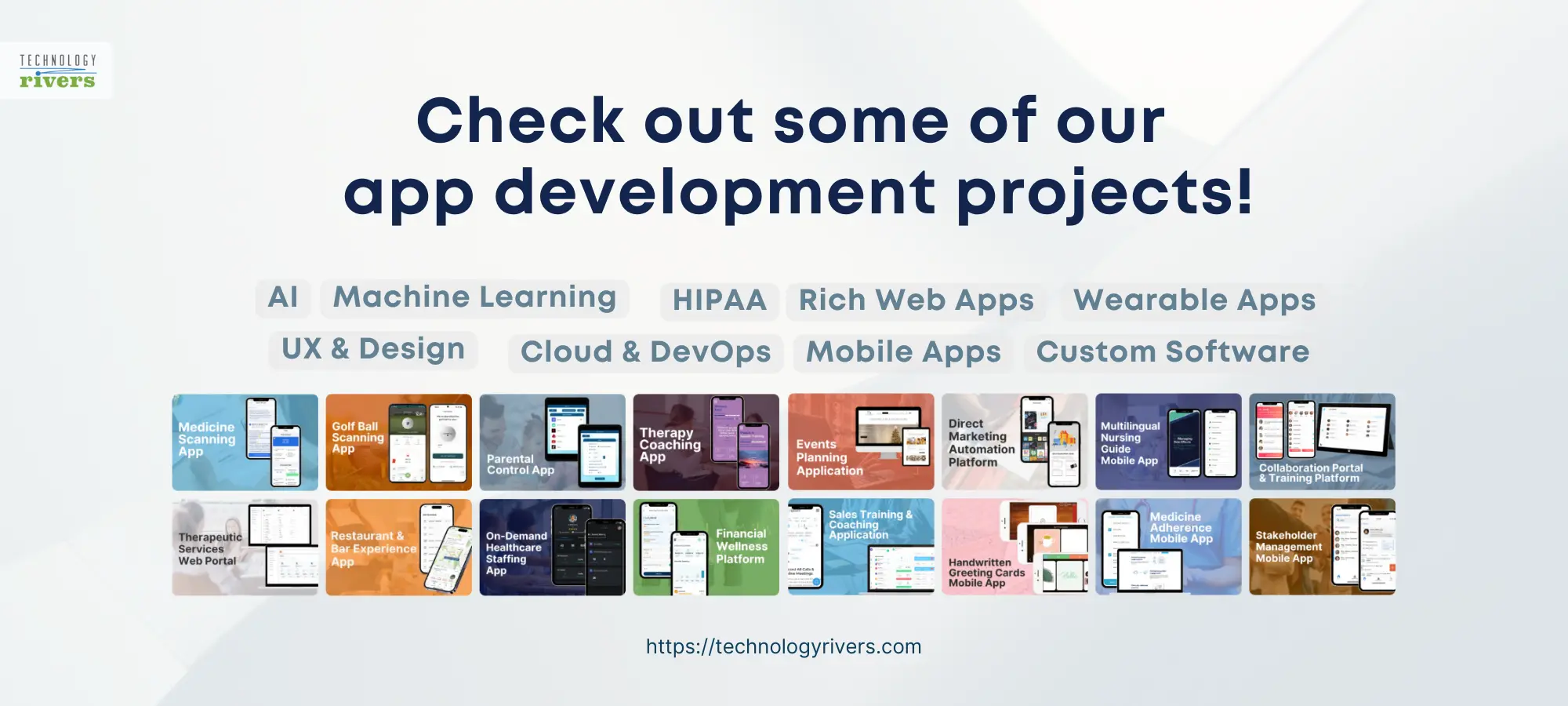
If you are evaluating AI automation solutions for your organization, it is important to start with the right workflow and architecture. Explore our portfolio to see how we have designed scalable enterprise automation systems.
How Enterprises Automate Workflows at Scale
- Fix the workflow before expanding the tooling. Map where work starts, which systems hold the data, where approvals happen, and where delays or exceptions appear. Without that visibility, automation usually speeds up the wrong process.
- Separate deterministic tasks from judgment-based work:
- Rules-based steps, such as routing, status updates, and notifications, can be automated directly.
- AI should be added where the workflow depends on classification, extraction, summarization, prioritization, or exception handling.
- Integrate the systems where work already lives. Scalable automation depends on connecting existing systems, not forcing teams into disconnected tools. That is why many enterprise initiatives require a mix of orchestration, APIs, and workflow design, often supported by our software development process when the workflow is complex or cross-functional.
- Build in monitoring, fallback paths, and human review. The goal is not fully autonomous automation everywhere, it is reliable workflow performance, with clear metrics for:
- Cycle time
- Exception rate
- Manual effort
How Enterprises Automate Workflows at Scale (In Practice)
Enterprises automate workflows at scale by fixing the workflow before adding AI. That means mapping each step, identifying where delays happen, separating rules-based tasks from judgment-based tasks, and then connecting the systems where the work actually lives. Technology Rivers makes the same point in its workflow process automation approach: automate end-to-end workflows, not isolated tasks.
A practical sequence looks like this: start with one high-friction workflow, integrate the core systems, add AI only where it improves classification, extraction, summarization, or routing, then build human review and monitoring into the process. That is also why the choice between standard automation, assistants, and agents matters. Technology Rivers’ related guide on automation, chatbots, or AI agents frames the decision around workflow complexity, variability, and risk, which is the right way to avoid overengineering.
At scale, success depends less on the model and more on orchestration, exception handling, and measurable workflow outcomes.
Automation, Chatbots, or AI Agents, Which One Fits the Workflow?
The right choice depends on how much judgment, variability, and system action the workflow requires. Simple automation works best for fixed, repeatable tasks like routing forms, updating records, or triggering alerts. Chatbots are better when users need quick answers, guided interactions, or basic support. AI agents make sense when a workflow involves multiple steps, changing context, and actions across systems.
This is where many enterprises get it wrong. They buy an AI tool first, then try to force workflows around it. A better approach is to match the tool to the process. For most enterprises, the best results come from a mix, not a single tool category.
What Breaks When AI Automation Solutions Scale Poorly
AI automation usually fails at scale for simple reasons: disconnected tools, bad process design, weak data quality, and no clear ownership. The workflow may work in a pilot, but once volume increases, exceptions pile up and teams start bypassing the system.
Governance is another common failure point. If no one defines approval rules, model behavior, fallback paths, or audit requirements, automation creates new risk instead of reducing work. This is especially important in regulated environments, where monitoring and compliance cannot be added later.
A good reminder is our blog on AI for workflow automation and compliance monitoring, which emphasizes that automation needs controls, visibility, and accountability to stay useful at scale.
Governance, Security, and Compliance for Enterprise AI Automation
Governance is what separates scalable automation from expensive rework. Once AI starts routing requests, summarizing documents, or triggering actions, enterprises need clear rules for who can access data, when humans must review outputs, and how decisions are logged.
Security matters just as much. Automated workflows should include role-based access, audit trails, approval controls, and fallback paths for exceptions. In regulated industries, that also means reviewing vendors, model behavior, and data handling before deployment, not after launch.
For teams evaluating risk early, Technology Rivers’ HIPAA-compliant mobile and web app development checklist is a useful reference for thinking through controls, visibility, and compliance from the start.
Best Practices for Implementing AI Automation Solutions
Start with one workflow that is slow, repetitive, and easy to measure. Avoid automating everything at once. A single, well-defined workflow lets your team test assumptions, catch issues early, and prove value before scaling. The best candidates have high volume, clear inputs and outputs, and minimal variation.
Design for exceptions early — edge cases are usually what break automation in production. Workflows that look clean on a diagram often get messy in practice — missing data, wrong formats, skipped approvals. Building exception-handling logic before go-live prevents automation from creating more manual work than it eliminates.
Keep humans involved in high-impact decisions, especially when approvals, compliance, or customer-facing actions are involved. AI should handle the routing, summarizing, and flagging — not the final call. Clear human handoff points protect your organization from errors with real business, legal, or reputational consequences.
Standardize metrics from the beginning. Without baseline data, it is impossible to know whether automation is actually working. Track:
- Cycle time — end-to-end workflow completion time
- Exception rates — how often the workflow requires manual intervention
- Rework — how frequently outputs need correction
- Human-touch points — how many steps still require manual effort
For enterprise teams planning broader rollout, Technology Rivers’ eBook, the ultimate checklist for software development, is a useful resource for structuring implementation decisions more deliberately.
Treat automation as an operating model change, not just a tooling project. The technology is rarely the hard part. Redesigning how decisions are made, how teams hand off work, and how accountability is structured is where most efforts succeed or stall. Organizations that approach AI automation as a change management initiative — with clear ownership and phased rollout — consistently outperform those that treat it as a one-time IT deployment.
Final Takeaway
Enterprises do not automate workflows at scale by adding AI to broken processes. They do it by redesigning how work moves, integrating the right systems, and applying AI where it improves speed, accuracy, and decision-making. The most successful teams start small, measure outcomes early, and build governance into the workflow from the beginning — because automation that scales is not just a technology decision, it is an operating model decision.
If you want to go deeper on how workflow design determines whether AI delivers real value, our webinar Is Workflow the Moat in Health AI? covers the core principles that apply across enterprise contexts, from structuring workflows before deploying AI, to building accountability into automation from the start. Watch the full session on YouTube.
If your organization is ready to move beyond pilots and build automation that is scalable, secure, and built for real operations, we can help. Schedule a call with our team to explore how Technology Rivers can support your next workflow transformation effort.
Frequently Asked Questions
What are AI automation solutions for enterprises?
AI automation solutions combine workflow automation with AI to handle tasks like classification, routing, summarization, and decision support. Unlike basic automation, they can work with unstructured data and more complex processes, which makes them useful for enterprise operations that span multiple systems.
How do enterprises automate workflows at scale?
They start by mapping one high-friction workflow, identifying bottlenecks, integrating the systems involved, and adding AI only where it improves speed or accuracy. The most effective approach is to redesign the workflow first, then automate it in a controlled, measurable way.
What is the difference between AI workflow automation and business process automation?
Business process automation follows fixed rules for predictable tasks. AI workflow automation adds intelligence to workflows by handling content, exceptions, and context-based decisions. In practice, many enterprises use both together rather than choosing one over the other.
When should a company use AI agents instead of traditional automation?
AI agents are a better fit when workflows involve multiple steps, changing context, and actions across several systems. Traditional automation is usually enough for repetitive, rules-based work. If the process needs reasoning and adaptive decisions, agents may be the better option.