Mobile app teams don’t fail because they lack features; they fail because users don’t stay.
Drop-offs during onboarding, low repeat usage, high intent, and low follow-through.
The fastest-growing apps today aren’t adding more screens or more buttons, they’re removing friction, and one of the most effective ways to do that right now is by adding AI voice features at the right moments in the user journey.
This article makes one clear argument:
AI voice improves mobile app engagement because it removes effort at critical interaction points, and effort is the enemy of retention and conversion.
Engagement Doesn’t Fail Because Users Don’t Care, It Fails Because Apps Ask Too Much
Most engagement problems show up in the same places:
- Users are abandoning onboarding halfway through.
- Forms that don’t get completed.
- Core features go unused after the first launch.
- High-intent users delay actions that require typing, searching, or navigating.
These aren’t motivation problems. They’re interaction-cost problems.
Text-heavy interfaces assume users are willing to stop, read, type, and decide often on small screens, in noisy environments, or while multitasking, but voice changes that assumption because when voice is done right, users don’t have to learn your app, they just use it.
This is why voice-first thinking is gaining traction beyond smart speakers. As explored in When Voice-First Apps Actually Make Sense (A 2026 Guide), voice works best when it reduces friction in real workflows, not when it’s added as a novelty feature.

The Growth Case for AI Voice in Mobile Apps
From a growth perspective, AI voice features consistently map to two outcomes product leaders care about most:
- Higher conversion rates
- Improved user retention
Here’s how:
1. Voice Collapses Multi-Step Actions Into One
Every extra tap, scroll, or text input adds friction, but voice compresses those steps into a single interaction. Instead of searching, filtering, reading, and typing, users can simply say what they want.
This is especially powerful during:
- onboarding and activation
- first-time feature discovery
- high-intent actions like booking, ordering, or submitting
Reducing friction at these moments directly impacts conversion, a core reason mobile apps continue to deliver business value, as outlined in The Top Benefits of Mobile App Development for Your Business.
2. AI Voice Turns Passive Apps into Interactive Experiences
Most mobile apps are reactive, the app doesn’t respond until users tap.
But AI voice changes that dynamic because with conversational prompts, confirmations, and guidance, apps feel responsive and intelligent. This perceived intelligence increases trust, which is a key driver of retention.
Modern AI voice is no longer robotic, with advances in expressive speech models (often referenced in discussions around platforms like ElevenLabs), user expectations have been raised which means AI voice app engagement is no longer experimental, but is fast becoming a competitive advantage.
3. AI Voice Enables Personalization Without Extra Screens
Personalization usually comes at the cost of more menus, more toggles, and more UI logic.
Voice allows apps to personalize in context, clarifying intent, adjusting flows, and responding dynamically without adding screens.
For product teams, this is critical because engagement improves without increasing interface complexity or development overhead.
Real-World Proof: AI Voice in Production Systems
This impact isn’t theoretical. Across multiple AI-driven development initiatives, Technology Rivers has implemented conversational and speech-enabled systems where voice reduced friction and improved task completion, particularly in environments where typing or manual input slowed users down.
The insight is consistent:
When users can speak instead of struggling, engagement follows.
Case Study Spotlight: Ripcord: Voice, AI, and Engagement at Scale
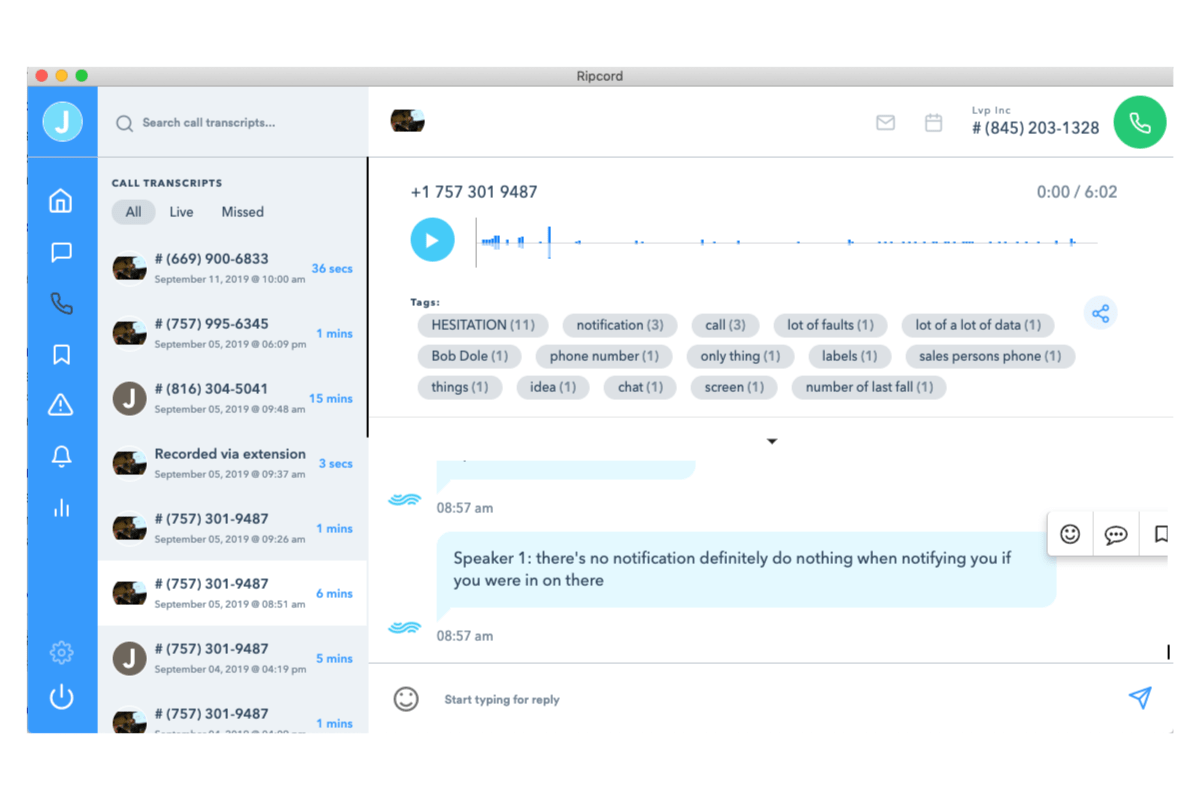
A clear illustration of this principle is the Ripcord Sales Training and Coaching Application.
Ripcord integrates:
- live voice interactions
- real-time speech transcription
- AI analysis of spoken conversations
Rather than relying on manual input or post-session summaries, users engage through voice in the moment. The result is higher participation, deeper engagement, and more consistent usage.
While Ripcord serves sales teams, the lesson applies broadly: voice removes effort at the exact point where engagement is won or lost.
Why Voice Works Now And Not Five Years Ago
Product leaders often ask, “Why invest in voice now?” 3 shifts make the timing right:
- AI voice quality now feels natural and trustworthy.
- Users are already comfortable speaking to software.
- AI can interpret intent, not just commands.
And because voice has moved from experimental to expected, especially for apps competing on experience, retention, and conversion.
Where AI Voice Delivers the Highest ROI
AI voice features have the greatest impact when applied to:
- onboarding and activation flows.
- high-intent conversion steps.
- accessibility and multilingual experiences.
- coaching, training, or expert-led apps.
- hands-busy or time-sensitive contexts.
If your app already solves a real problem, voice can make that solution effortless, and effortlessness drives retention.
Turning Voice Into a Lead-Generating Growth Feature
The biggest mistake teams make is adding voice as a standalone feature. High-performing apps treat AI voice as:
- part of the user journey.
- aligned with conversion and retention metrics.
- integrated into product strategy.
This is where experienced teams make the difference, and Technology Rivers’ mobile app development services focus on building engagement-driven features that support measurable growth, not just technical delivery.
So if your app’s growth is limited by friction and not demand, AI voice is one of the most direct ways to unlock engagement, not because it’s trendy but because it aligns with how users naturally want to interact.
For product managers and technical leads, the question is no longer “should we consider AI voice?”, it’s “where does voice remove the most friction in our user journey?”

Ready to Explore AI Voice for Your App?
If you’re evaluating AI voice features as a way to:
- increase conversion rates
- improve user retention
- unlock new engagement patterns
Contact Technology Rivers to discuss designing and building an AI voice engagement strategy tailored to your product goals.
Because voice isn’t the future of mobile engagement, it’s already driving growth for teams that implement it strategically.