We have all downloaded apps we never opened again. Others we tried exactly once. If you’re building a product, the real work isn’t getting the download, it’s the mobile app retention strategies you put in place afterward. This article covers what earns an app a permanent place on a user’s phone, why retention is the more economical growth lever than acquisition, and how to tell whether your efforts are actually working.
In addition to the tips and strategies covered in this article, we’re also sharing ideas about the ways you can battle mobile app competition and some of the tools to track and monitor the progress of your app so that you can work in implementing these strategies.
- 6 Ways to Battle Mobile App Competition
- Mobile App Metrics & Tools: How to Measure and Improve App Performance
The Competition Doesn’t End at Download
Getting your app in front of people and convincing them to install it is a feat in itself. Estimates of daily new-app volume vary by tracker and definition, but recent industry data puts App Store publishing in the thousands of new apps per day, and standing out only gets harder as that number climbs. But the harder contest starts after the install.
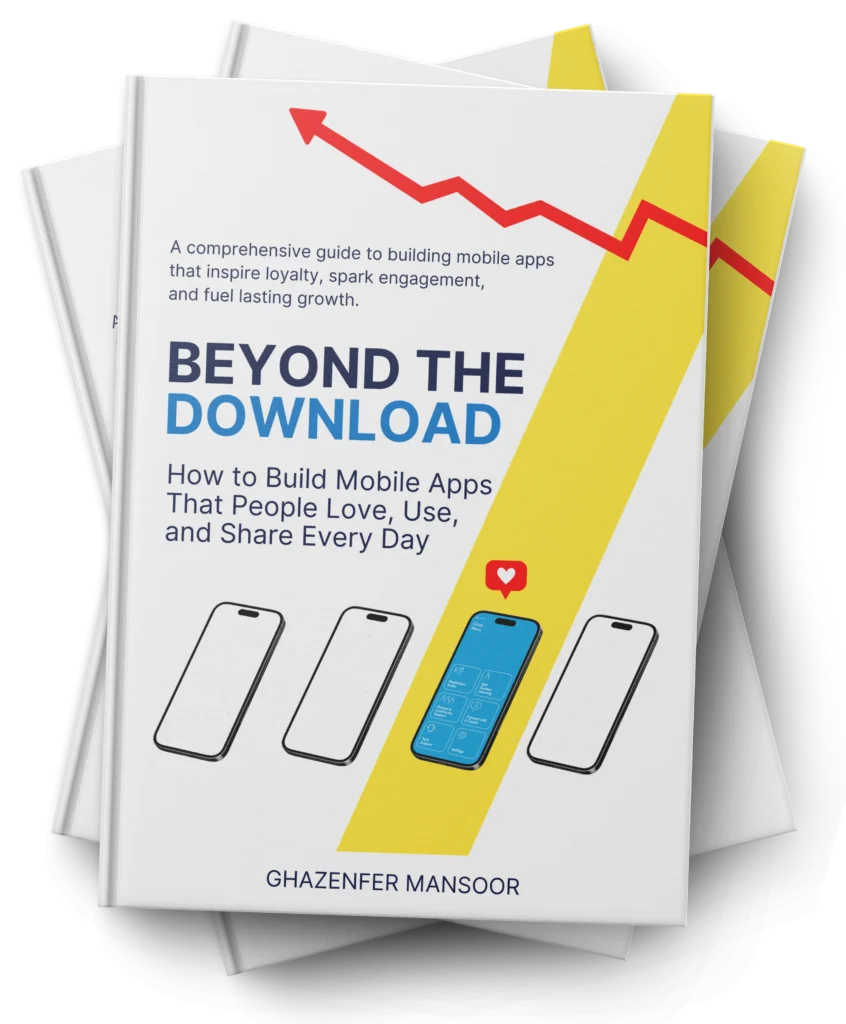
Many of the ideas in this guide are drawn from Beyond the Download, Technology Rivers CEO Ghazenfer Mansoor’s book on building and growing successful mobile apps. One of the book’s central themes is that retention isn’t something you optimize after launch, it’s something you design into the product from the very beginning.
Every onboarding decision, notification, feedback loop, and reward either gives users another reason to return or another reason to leave.
As Ghazenfer writes:
“Push brings them back. In-app keeps them around.”
That idea runs throughout this guide. The strategies below expand on that thinking, showing how onboarding, communication, incentives, and measurement work together to turn first-time users into long-term customers.
That first-session drop-off is unfortunately the norm, even for well-built apps, with retention thinning further at the 30-day and one-year marks. Downloaded, then deleted or forgotten, is the default outcome, not the exception.
That’s why downloads alone are a misleading success metric. Take a moment to celebrate the install, then shift your attention to the numbers that predict survival: how many people come back each day, how long they stay, and how many quietly remove your app. We’ll cover how to measure that at the end of this article.
There’s also a hard financial reason to make this shift. Keeping a current user is cheaper than winning a new one. AppsFlyer puts the average cost per install for Android around $1.20, with iOS running roughly three times higher at $3.60. Every point of churn you prevent is acquisition budget you don’t have to spend twice.
What Makes Users Stay
Whether your app keeps its place on someone’s home screen comes down to a handful of decisions, most of them inside the product, some in how you communicate around it. Each of the strategies below is another hook that makes your app harder to abandon, and together they’ll improve app user retention far more than any single tactic alone.
Nir Eyal calls that pattern, trigger, action, reward, investment, the Hook Model.
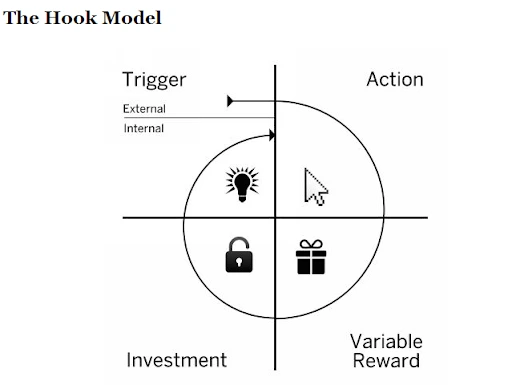
Every tactic ahead maps to one stage of that loop, trigger as push notifications, action as the onboarding work up next, reward as the incentives and gamification further down, investment as the feedback loops that close the cycle.
Onboarding: Show Value Before You Ask for Anything
The onboarding process is like a first date with your user. Everything has to go smoothly if this relationship is going to make it and you don’t get a second chance at it.
Users installed your app because they believed it would solve a problem. Prove it as fast as possible: a quarter of users abandon an app after a single session, usually because they didn’t reach that value quickly enough. Long tutorials, upfront sign-up forms, and too much information at once all delay that proof, and every delay costs you users who will never come back. If your app lets people search for waterfront properties, let them search. The fewer obstacles between the user and the value, the more of your downloads survive the first session.
That principle, stability and simplicity over ceremony is what users notice most. As one of our clients put it:
“Technology Rivers has built a reliable product, with a fantastic quality of work. All of our users are happy with it. The platform is stable, fast, and functional. It’s simple and straightforward to use.” – Co-founder, WeLearnOn
Ask Only for What You Absolutely Need
The tricky part is that your app likely needs some information or access to function. The rule: ask as early or as late as possible, and nothing in between.
If your app cannot deliver value without a permission, location for a maps app, camera for a scanner – request it immediately, with a one-line explanation of why. Everything else, account creation, email address, push notification opt-in, should wait until the user has experienced the value.
A user who hasn’t seen what your app can do has no reason to hand over anything, and asking anyway is one of the easiest ways to lose them before they’ve started.
Remove Friction From the First Session
Every extra tap in a first session is a potential drop-off point. Show users only the basics they need to give the app a real try, and let them defer the rest. Small choices compound here: offering a social login alongside email sign-up, pre-filling what you can, collapsing three screens into one. The payoff isn’t cosmetic – a smoother first session directly raises activation, and activated users are the only ones who can become retained users.
Communication That Retains Instead of Annoys
You’re walking a fine line here between a helpful reminder and a reason to uninstall, overcommunication is one of the fastest ways to lose users you worked hard to onboard.
Push notifications, used strategically. Push notification personalization has been shown to boost reaction rates by roughly 4x, and apps that send targeted push messages see 39 percent of users still active at 11+ sessions, compared to 21 percent for apps that only send broadcast messages. Personalization and timing are what separate the two outcomes: a message tied to something the user actually did lands as a service; a generic blast lands as spam.
The clearest way to do this is to trigger off real behavior rather than a calendar, a completed task, an abandoned session, a streak about to break, not a generic reminder sent to everyone at 9am. Always make opting in and out effortless, a user who mutes you is still a user, while one you’ve annoyed into uninstalling is gone.
In-app messaging. In-app messages reach users at the exact moment of intent while they’re inside your product, already engaged. If a user is exploring a feature they haven’t used before, a brief in-app explanation can turn confusion into a habit without bombarding them. Prioritize this channel because it’s the one that can’t interrupt at the wrong time, the user is already there. Which of the two, push or in-app, matters more for your app right now depends on where users are actually dropping off, and that’s worth diagnosing before you invest heavily in either.
Let users choose the channel. Whether it’s in-app chat, email, or a visible support link, make it obvious how to reach you. The reason this matters for retention: a frustrated user who can’t find help doesn’t complain, they churn silently. One who gets a fast answer often becomes more loyal than a user who never had a problem at all.
Retention problems can hide in any of these layers; onboarding, communication, the product itself, even pricing, competitive positioning, or support quality. Product decisions are usually the biggest lever, but they’re rarely the only one. If you’re not sure where yours live, Technology Rivers builds mobile apps engineered for retention from the ground up. Talk to our team.
Turning Active Users Into Loyal Ones
Getting users engaged is half the job; keeping them engaged and re-engaging those whose use has tapered off, is the other half. Without deliberate effort here, even a strong start decays.
Gamification. Free-to-play mobile games are among the stickiest categories in mobile, and much of that stickiness comes from mechanics like points, levels, and streaks that give users a reason to open the app again the next day. Borrowing those mechanics for a non-game app turns routine usage into a habit loop, and habits are what retention curves are made of.
Incentives and loyalty programs. Offer perks to your longtime users; discounts, early access to new features, recognition. The business case is direct: rewarded users stay longer, spend more, and refer more, which raises lifetime value on users you’ve already paid to acquire.
Well-known research on loyalty economics has found that even a small increase in retention rate can drive a disproportionately large increase in profit, which is exactly what a loyalty program is designed to move.
Social sharing. Make it easy for users to share from inside the app, a completed workout, a saved property, an achievement, a referral link. Each share is acquisition you didn’t pay for, and referred users typically arrive with more trust than users from paid channels. Skip this and you leave your most enthusiastic users with no way to work for you.
Continual improvement. The biggest mistake is treating your app as finished. A stagnant app signals abandonment, and users respond in kind by abandoning it back. A visible cadence – a changelog entry that says “faster search” or “fixed the crash on checkout,” not just a version number bump, tells users their investment in your app is safe.
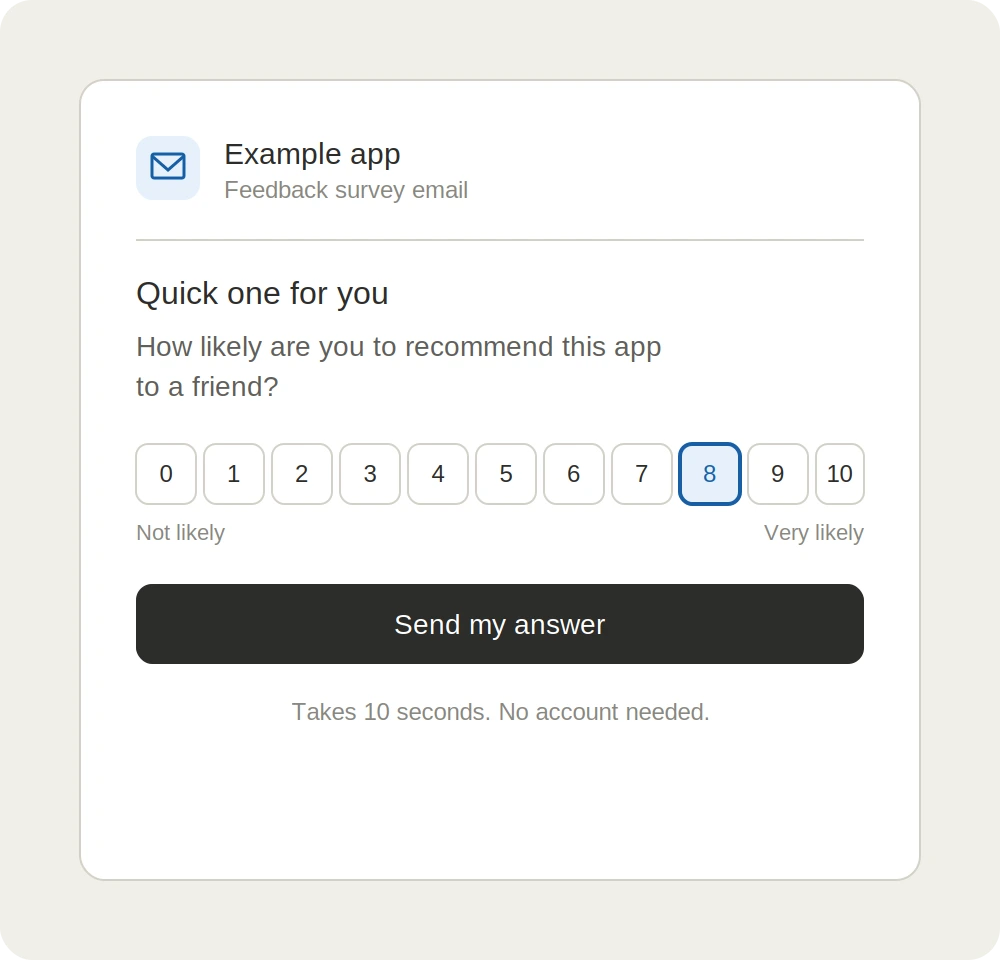
Feedback loops. Make leaving feedback obvious and effortless. Felt App, a Technology Rivers client whose story is a case study in Beyond the Download, the book by our CEO Ghazenfer Mansoor, built this directly into their growth strategy: simple one-question surveys by email, and Net Promoter Score tracked among users who’d opened the app more than once. That mix of lightweight feedback and real usage data helped them turn a side project into a sustainable business, without feedback ever feeling like a chore to the user.
How Do You Know It’s Working?
Measuring whether your app is actually getting stickier goes well beyond downloads and daily active users. The core signals: your retention curve at day 1, day 7, and day 30; your churn rate; session length and frequency; and funnel analysis showing exactly where users leave and the path they take before they do. Those numbers tell you which of the strategies above is working and which section of your app is quietly bleeding users.
Most apps, even good ones, follow the same basic shape when you plot that curve: a steep fall on the first day, then a long, shallow tail. The size of that first-day drop is usually the clearest signal of where to focus.
None of This Works Alone
Nobody wants to go through the work of creating, testing, and honing a great app only to have users walk away after a single session. A launch plan gets you downloads; only a real set of mobile app retention strategies turns those downloads into a business.
It doesn’t work overnight, either. A perfectly timed push notification won’t save an app with confusing onboarding, and the best onboarding in the world can’t make up for messages that show up at the wrong moment. What compounds is the whole system working together, each hook reinforcing the next, until staying is simply the path of least resistance for your users.
Whether you’re building a new app or trying to reduce app churn in one that’s already live, Technology Rivers designs mobile apps for retention from day one, explore our mobile app development services and let’s talk about your project.