What’s Popular and How to Choose the Right One
JavaScript isn’t just for browsers anymore. In 2025, it powers everything from web and mobile apps to backend systems and IoT devices. With that reach comes an overwhelming number of frameworks — each one promising better speed, scalability, and developer experience.
So which one should you use?
We’ve ranked the most popular JavaScript frameworks of 2025 using three key criteria:
- Community adoption
- Developer satisfaction
- Real-world usage
Whether you’re picking a stack for your next product or deciding what to learn next, this guide breaks down what matters and helps you choose the right framework for your goals.
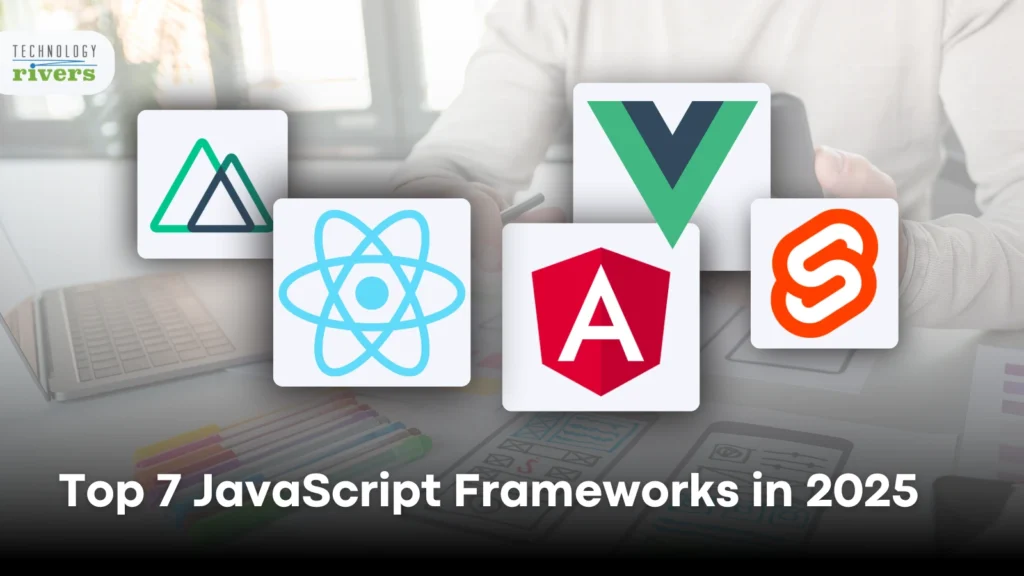
Most Popular JavaScript Frameworks in 2025 (Quick List)
| Framework | Release Year | Usage Type | Company Backing |
| React | 2013 | Frontend / UI | Meta |
| Vue | 2014 | Frontend / UI | Independent |
| Angular | 2016 (rewritten from AngularJS) | Full-featured frontend | |
| Next.js | 2016 | Full-stack (React-based) | Vercel |
| Svelte | 2016 | Frontend / Compiler-based | Independent |
| Nuxt.js | 2016 | Full-stack (Vue-based) | Nuxt Labs |
| Remix | 2020 | Full-stack (React-based) | Remix.run |

1. React — Still the Reigning Champ of UI Frameworks
React has dominated the front-end space for nearly a decade, and in 2025, it’s still the top choice for building scalable, interactive web apps.
Why It’s Popular
- Backed by Meta and used by Facebook, Netflix, Airbnb, and Shopify
- Component-based architecture enables reusable, fast UIs
- Massive developer community and job market
Best For
- Single Page Applications (SPAs) with high interactivity
- Scalable products that need strong developer tooling and flexibility
Ecosystem Highlights
- Next.js for server-side rendering and full-stack capabilities
- React Native for cross-platform mobile apps
- Vite + SWC for lightning-fast builds and development
Watch Out For
- Requires manual setup for routing, state management, and other features
- Complexity can grow quickly — often needs supporting libraries (like Redux, React Query, or Zustand)

2. Vue.js — The Developer-Friendly Favorite
Vue has grown from a “lightweight React alternative” into a fully capable framework with a passionate community. It’s approachable, flexible, and surprisingly powerful.
Why It’s Popular
- Easy to learn — great for beginners and solo developers
- Excellent, up-to-date documentation
- Can be adopted gradually into existing projects
Best For
- Prototypes, internal dashboards, and B2B tools
- Projects that need speed, simplicity, and flexibility without sacrificing power
Ecosystem Highlights
- Vue Router for seamless navigation
- Pinia for modern, intuitive state management
- Nuxt.js for server-side rendering and full-stack development
Watch Out For
- Smaller hiring market compared to React (though steadily growing)
- Some larger organizations still lean toward React by default

3. Angular — The Full-Featured Powerhouse
Angular is the heavyweight of the JavaScript world. Backed by Google, it’s a comprehensive framework that ships with everything you need: routing, forms, HTTP handling, testing, and more — no need to piece together external libraries.
Why It’s Popular
- Backed and maintained by Google
- Built-in support for TypeScript
- All-in-one framework with first-class tools for routing, forms, and testing
Best For
- Large, complex apps with lots of business logic
- Enterprise teams that value structure, scalability, and robust tooling
Ecosystem Highlights
- RxJS for reactive programming and async data handling
- Angular CLI for rapid project setup and scaffolding
- NgRx for state management modeled after Redux
- Protractor and Jasmine/Karma for testing
- Angular Universal for server-side rendering and SEO support
Watch Out For
- Steeper learning curve compared to other frameworks
- Verbose syntax and boilerplate code can slow down early development

4. Next.js — The SEO-Friendly React Framework
Next.js is the go-to React framework when you need server-side rendering (SSR), static site generation (SSG), or hybrid rendering — all in one tool. Developed and maintained by Vercel, it seamlessly bridges frontend and backend, making it a top choice for modern full-stack applications.
Why It’s Popular
- Optimized for SEO and performance out of the box
- Built-in API routes let you handle backend logic in the same repo
- Supported by Vercel and used by companies like Twitch, Notion, and TikTok
- Image optimization, edge rendering, and middleware are built-in
Best For
- Content-heavy apps and marketing sites
- Ecommerce platforms that require fast page loads and SEO
- Teams building with React who want full-stack flexibility
Ecosystem Highlights
- App Router (introduced in v13+) with file-based routing and nested layouts
- Vercel integration for seamless CI/CD, edge functions, and global deployment
- NextAuth.js for authentication
- Turbopack (in preview) for even faster bundling
- Works smoothly with Tailwind CSS, Prisma, GraphQL, and more
Watch Out For
- Learning curve can increase with new features (App Router, server components, etc.)
- Can be overkill for simple frontend-only apps
- Performance benefits require thoughtful implementation (e.g., data fetching strategy)

5. Svelte — The Compiler-Based Speedster
Svelte takes a radically different approach from traditional frameworks. Instead of using a virtual DOM, it compiles your components into highly optimized vanilla JavaScript at build time — resulting in faster apps with less code.
Why It’s Popular
- Compiles away framework overhead for better runtime performance
- Minimal boilerplate and highly readable code
- Prioritizes simplicity and developer experience (DX)
- No runtime = smaller bundle sizes and faster loads
Best For
- High-performance dashboards and real-time interfaces
- Mobile web apps where speed and responsiveness matter
- Teams that value DX and want to move quickly without heavy abstractions
Ecosystem Highlights
- SvelteKit for routing, server-side rendering (SSR), and static site generation
- Vite or Rollup as preferred bundlers
- Svelte Native (experimental) for mobile app development
- Growing plugin ecosystem for forms, animations, and state management
Watch Out For
- Smaller ecosystem compared to React or Vue
- Fewer third-party libraries and integrations
- Some tooling and documentation still evolving as the community matures

6. Nuxt.js — Vue’s Full-Stack Power Play
Nuxt.js builds on everything developers love about Vue — and adds the full-stack features needed for modern web apps. With support for server-side rendering (SSR), static site generation (SSG), and powerful routing out of the box, Nuxt is Vue’s answer to frameworks like Next.js.
Why It’s Popular
- Zero-config setup with sensible defaults
- SEO-friendly by design (great for content-driven sites)
- File-based routing makes page management fast and intuitive
- Supports SSR, SSG, and hybrid rendering with ease
Best For
- Jamstack-style websites and content platforms
- Blogs, portfolios, and marketing sites
- Vue-based apps that need backend logic or API integration
Ecosystem Highlights
- Nuxt Content for Markdown-based content and blogs
- Nuxt UI, Nuxt DevTools, and Nuxt Modules for rapid development
- Nitro server engine for full-stack support, including serverless deployments
- Integrates well with Tailwind CSS, Pinia, and VueUse
- Hosted and optimized easily via Vercel, Netlify, or custom Node servers
Watch Out For
- Learning curve can be steep if you’re not already familiar with Vue
- Abstracted architecture can sometimes make debugging more complex
- Frequent feature updates mean staying current requires attention

7. Remix — The Modern React Framework Built on Web Fundamentals
Remix is one of the newer players in the JavaScript ecosystem, but it’s quickly gaining traction — especially among developers who care about performance, accessibility, and using the web the way it was intended. By connecting routing with data loading and leaning into native browser features, Remix delivers fast, resilient apps out of the box.
Why It’s Popular
- Routes and data fetching are tightly coupled for better performance
- Embraces web standards like forms, fetch requests, and URL state
- Optimized for fast time-to-interactive and resilient UX
- Built with progressive enhancement in mind
Best For
Teams building full-stack apps where performance and accessibility matter
Developers who want to work with web fundamentals, not fight them
React projects that need tight control over loading states, caching, and routing
Ecosystem Highlights
- Remix Stacks for starter kits with preconfigured routing, testing, auth, and deployment
- Built-in support for nested routing and loader functions
- Integrates well with Express, PostgreSQL, Prisma, Tailwind CSS, and Vercel
- Seamless deployment to serverless platforms like Cloudflare Workers, Fly.io, and Netlify
Watch Out For
- Smaller community and ecosystem compared to React’s bigger frameworks (like Next.js)
- Newer features and changes may require close attention to docs and updates
- Some hosting environments may need more configuration for SSR
How to Choose the Right JavaScript Framework
With so many strong options, choosing the right framework depends on your project’s goals, scope, and team. Here are a few key questions to help narrow your focus:
- Is SEO critical to your success?
- How large or complex is the app you’re building?
- Do you need server-side rendering (SSR) or static site generation (SSG)?
- Are you working solo or with a team?
- Do you prefer flexibility (like React) or a more opinionated structure (like Angular)?
Framework Cheat Sheet:
| Goal | Recommended Frameworks |
| SEO + Performance | Next.js, Nuxt.js |
| Enterprise-Scale Apps | Angular, React |
| Fast Prototyping | Vue, Svelte |
| Full-Stack with React | Remix, Next.js |
| Simplicity + DX | Svelte, Vue |

Final Thoughts: Choosing the Right JavaScript Framework in 2025
The JavaScript ecosystem is more powerful — and more crowded — than ever. Whether you’re building for web, mobile, or both, choosing the right framework upfront can save you weeks of development time (and a lot of future frustration).
In 2025, React, Vue, and Angular remain the most widely adopted frameworks. But tools like Svelte, Remix, and Nuxt are gaining serious ground — offering fresh approaches and better performance for modern app development.
Not Sure Which Framework Fits Your Product?
At Technology Rivers, we’ve helped startups and enterprises turn complex ideas into high-performance apps — using the stack that fits your needs, not someone else’s template. No bloated frameworks. No cookie-cutter solutions. Just thoughtful strategy and clean, scalable code.
⇨ Book a free call with our team — and let’s talk about what you’re building.