Artificial Intelligence is transforming industries at an unprecedented pace. From automating customer support to analyzing complex datasets, modern AI systems have become indispensable tools for organizations. Yet, with great power comes great responsibility—especially when handling sensitive data.
Healthcare providers, finance firms, and other regulated industries face the challenge of leveraging AI capabilities without compromising privacy or compliance. Regulatory frameworks such as GDPR, HIPAA, PCI, and SOX impose strict requirements on how sensitive data is stored, processed, and transmitted. Failing to comply not only risks heavy fines but also erodes customer trust and damages brand reputation.
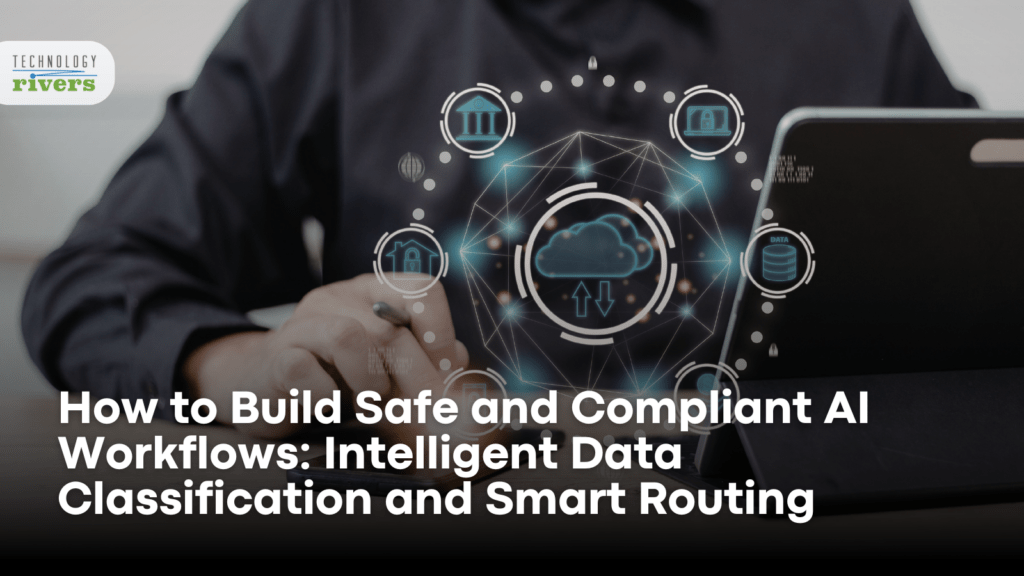
To meet these challenges, organizations must adopt AI workflows that prioritize data security, regulatory compliance, and operational efficiency. Two critical concepts that enable this are intelligent data classification and smart routing.
Understanding Intelligent Data Classification
At the heart of secure AI workflows lies the ability to automatically detect and classify sensitive information. This involves analyzing data from various sources—user interactions, webhooks, API requests—and identifying Personally Identifiable Information (PII) or other sensitive content.
Traditional approaches often rely solely on pattern matching using regular expressions or keyword detection. While helpful, these methods can miss context-specific sensitivity or generate false positives.
Modern AI-driven classification systems go beyond simple pattern recognition by being context-aware. For example:
- A discussion about a patient’s heart condition is flagged as sensitive even if no name or identifier is mentioned.
- Financial conversations can be detected as high-risk even without account numbers being explicitly present.
By understanding context, these systems proactively protect sensitive data before it is exposed, which is especially critical in healthcare platforms like our remote patient monitoring (RPM) solution and telehealth applications.
The Role of Smart Routing
Once sensitive data is identified, it must be handled appropriately. Smart routing ensures that data is processed according to its risk level rather than a simple sensitive/non-sensitive binary.
A typical multi-tier routing system might work as follows:
- High-risk data, such as PII or PHI, is processed in secure, isolated environments to guarantee maximum protection.
- Low-risk or non-sensitive data can be processed in the cloud, taking advantage of scalable AI compute without unnecessary overhead.
- Medium-risk data can use a hybrid approach, balancing security and performance.
This tiered approach reduces operational costs, improves efficiency, and ensures a seamless user experience. In our medication adherence platform, for instance, sensitive patient information is routed locally, while aggregated behavioral insights are analyzed in the cloud to provide actionable recommendations.
Moving Beyond Binary PII Detection
Traditional privacy systems often treat data as simply sensitive or not sensitive. This binary approach can lead to either over-restrictive policies or inadvertent exposure.
Modern workflows use risk scoring to assess sensitivity dynamically:
- Multiple low-risk signals can combine into a high-risk score, ensuring no vulnerability is overlooked.
- Adaptive thresholds allow organizations to adjust sensitivity based on compliance needs or operational requirements.
- Users experience fewer unnecessary restrictions, improving adoption while keeping data safe.
- Detailed audit trails provide transparency for regulatory review.
These practices are particularly effective in telehealth systems, where nuanced classification ensures both compliance and smooth patient interaction.
Comprehensive Monitoring and Auditing
Even advanced AI workflows require ongoing monitoring. Robust auditing ensures that data handling remains compliant and efficient.
Benefits include:
- Regulatory compliance: Complete logs of data classification and routing support audits.
- Performance optimization: Identify bottlenecks and improve workflow efficiency.
- Security assurance: Prevent accidental data leaks through consistent rule enforcement.
- Operational insights: Track system usage patterns and inform future AI strategy.
In our RPM projects, for example, monitoring pipelines ensure clinicians can access real-time patient data safely while maintaining a full audit trail for HIPAA compliance.
Real-World Applications and Impact
Integrating intelligent data classification and smart routing isn’t just theory—it has concrete benefits:
- Remote Patient Monitoring (RPM): Ensures patient health metrics and clinician notes are processed securely while enabling real-time insights.
- Telehealth Platforms: Securely manage video and chat transcripts, automatically generating clinical notes without compromising PHI.
- Medication Adherence Apps: Safely collect and process adherence data to provide actionable feedback without exposing sensitive information.
These projects demonstrate how organizations can leverage AI while maintaining strict compliance, improving both operational efficiency and patient outcomes.
Why It Matters
For organizations handling sensitive data, these practices are no longer optional. By implementing context-aware data classification, risk-based routing, and continuous monitoring, businesses can:
- Protect customer and patient information
- Comply with complex regulations like HIPAA and GDPR
- Maintain high-performance AI workflows
- Deliver secure, seamless user experiences
This framework lays the foundation for safe, scalable, and compliant AI adoption, empowering organizations to innovate confidently.
We recently hosted a deep-dive webinar, “Is Workflow the Moat in Health AI?”, where our expert panel explored why workflows, not models alone, are becoming the competitive edge in healthcare AI implementation. We unpacked how structured clinical processes, secure data orchestration, and compliant automation are shaping the future of connected care. If you missed it, you can watch the full discussion below — it’s packed with actionable insights for product leaders, healthtech builders, and compliance teams looking to leverage AI responsibly and strategically.
Watch the full webinar here:
Conclusion
Deploying AI responsibly requires more than just powerful models. It requires intelligent, context-aware systems that understand the sensitivity of data and take appropriate actions. Combining advanced classification, smart routing, and comprehensive monitoring allows organizations to harness AI’s potential while safeguarding sensitive information, remaining compliant, and building trust with users.
In today’s AI-driven world, prioritizing privacy and compliance is not just a technical requirement—it is a business imperative.