AI agents have come a long way from the days of simple chatbots. In 2026, they’ve become autonomous systems that can analyze, plan, and act, unlocking new possibilities for startups and enterprises.
According to a recent developer survey, 67% of teams are already using AI agents in production apps, with ChatGPT and LangChain leading adoption. For most teams, the real challenge isn’t deciding whether to adopt AI agents — it’s matching the right tool to the right use case.
At Technology Rivers, we’ve worked with founders, healthcare innovators, and SaaS teams who needed to make these decisions. This guide breaks down the best AI agent building tools in 2026, their strengths, and how to choose the right one. If you’re evaluating agentic builds for real products, see our AI-driven development approach and AI and machine learning services.
The Problem: Too Many Choices, Too Little Clarity
The AI agent landscape is thriving — but also overwhelming. Choosing poorly can mean wasted time and costly pivots. Common challenges include:
- Overlapping features that make it hard to distinguish tools.
- Scalability issues if the framework doesn’t grow with your product.
- Integration overhead when connecting to APIs, data sources, or workflows.
- Compliance and security gaps, especially in industries like healthcare.
We’ve seen teams start with one platform only to realize months later that another tool would have saved them significant development time.
Best AI Agent Building Tools in 2026
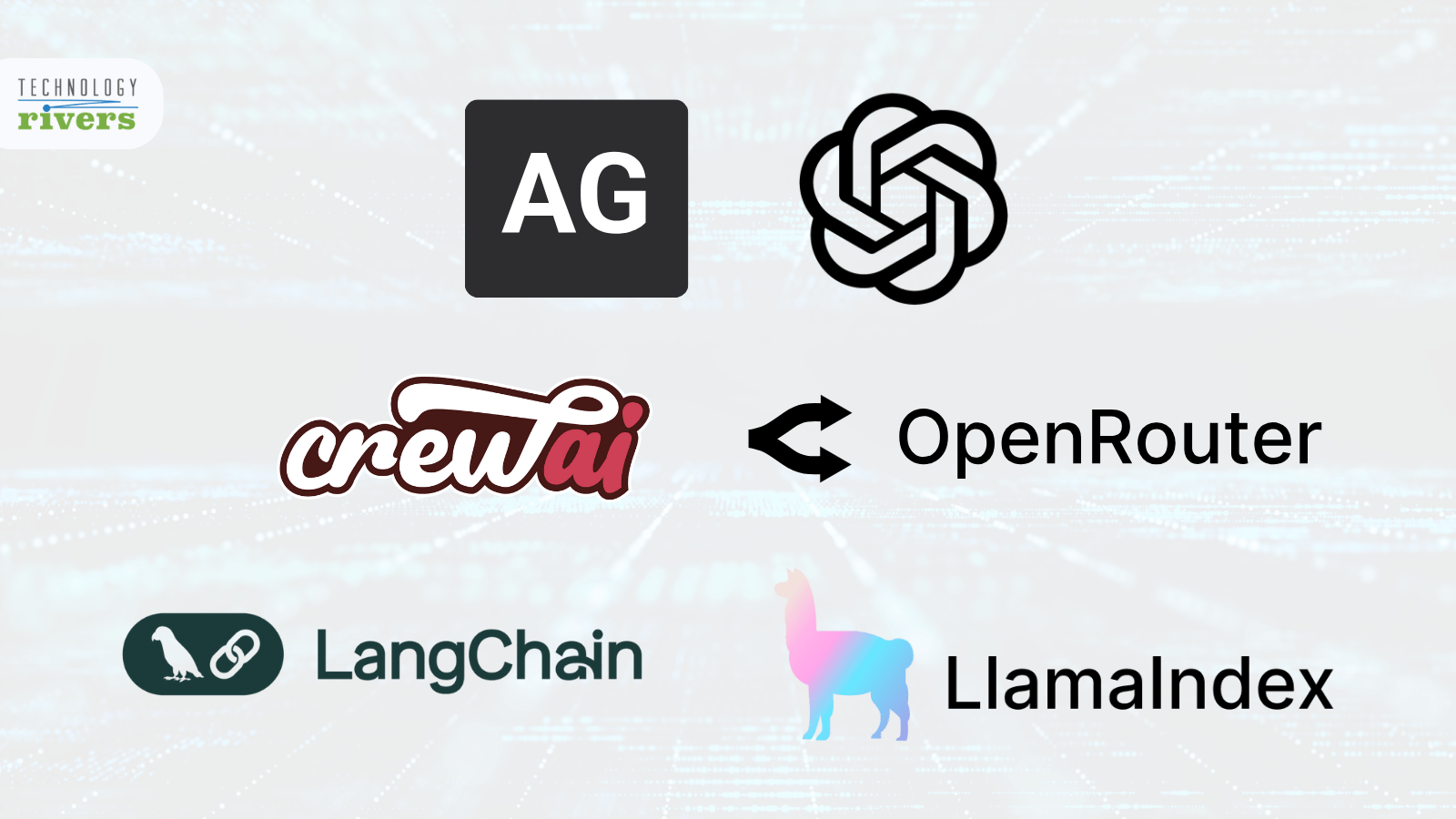
1. ChatGPT (OpenAI)
Best for: Rapid prototyping and production-ready assistants
OpenAI’s ChatGPT with Assistants API makes it easy to:
- Define roles and instructions for custom AI agents.
- Use function calling for executing external actions.
- Handle file uploads, structured outputs, and API calls.
💡 Developers often choose ChatGPT for production-ready chatbots, support agents, and internal copilots.
2. LangChain
Best for: Workflow-driven applications
LangChain is the go-to framework for orchestrating complex AI workflows. Features include:
- Chains for modular task logic.
- Agents that pick tools dynamically.
- Memory for persistent context.
Developers prefer LangChain for retrieval-augmented generation (RAG), data-intensive apps, and situations requiring multiple tool integrations. If you’re building RAG systems, see RAG applications explained: how to build one with LangChain and Claude.
3. CrewAI
Best for: Multi-agent collaboration
CrewAI introduces the concept of AI teamwork, where each agent has a role, goal, and task assignment.
- Agents can pass results between each other.
- Supports task delegation and collaboration.
- Ideal for research, writing pipelines, and automation.
Think of it as creating an AI startup team—researcher, writer, reviewer—working together.
4. LlamaIndex (formerly GPT Index)
Best for: Knowledge-powered agents
LlamaIndex shines in data integration. Developers can:
- Index documents, databases, and APIs.
- Build custom retrieval pipelines.
- Allow agents to reason over structured/unstructured data.
Perfect for enterprise search, customer support, and private knowledge assistants.
5. OpenRouter
Best for: Multi-model access & cost control
Instead of committing to one model, OpenRouter lets developers:
- Route queries to GPT-4, Claude, LLaMA, Mistral, and more.
- Compare latency, cost, and quality.
- Add failover reliability for production use.
This makes it a strong choice for scalable AI deployments.
6. Microsoft AutoGen
Best for: Simulations & experimental systems
Microsoft AutoGen provides tools for building multi-agent conversations where agents collaborate or debate.
- Great for simulation environments.
- Useful in research, gaming, and education.
- Helps test AI-to-AI collaboration patterns.
Comparison of AI Agent Tools (2026)
| Tool | Best For | Key Features | Developer Adoption* |
|---|---|---|---|
| ChatGPT | Rapid prototyping, assistants | Roles, function calling, API calls | 82% |
| LangChain | Workflow-heavy apps | Chains, memory, tool integration | 74% |
| CrewAI | Multi-agent collaboration | Roles, tasks, delegation | 41% |
| LlamaIndex | Knowledge-driven systems | RAG pipelines, data connectors | 55% |
| OpenRouter | Cost optimization & flexibility | Multi-model routing, failover | 37% |
| AutoGen | AI simulations & experiments | Multi-agent conversations | 29% |
*Adoption data based on developer community surveys.
Benefits of AI Agent Tools
Choosing the right AI agent tool can deliver:
- Faster time-to-market for AI apps.
- Scalability with modular frameworks.
- Cost savings through multi-model routing.
- Higher accuracy using knowledge-driven pipelines.
- Better automation through multi-agent collaboration.
Best Practices for Developers
✓ Start simple with ChatGPT if you want a production-ready agent fast.
✓ Pick LangChain if your app requires workflows or multiple integrations.
✓ Use CrewAI for scenarios that benefit from agent collaboration.
✓ Adopt LlamaIndex when your AI needs deep knowledge access.
✓ Try OpenRouter if you care about cost-performance trade-offs.
✓ Experiment with AutoGen for simulations and multi-agent testing.
Conclusion
The AI agent ecosystem in 2026 is diverse and powerful. From ChatGPT to CrewAI, each tool offers unique strengths — and no one-size-fits-all solution exists.
At Technology Rivers, we’ve learned through our AI-driven development projects that success depends on aligning the right framework with your business goals, compliance requirements, and scalability needs. The right choice can save months of rework and unlock lasting value.
For a broader perspective on how startups can leverage these tools, you may also enjoy our blog on why AI-driven development is the future of MVPs for startups.