Vibe Coding Explained: How Developers Can Code with AI Like a Conversation
Most developers lose hours wrestling with boilerplate code; they know exactly what they want to build, but translating that vision into clean, functional code takes time, especially under tight sprint deadlines.
That friction creates repetitive syntax, slows prototyping, and forces constant context switching between documentation and the IDE. Junior developers get stuck on implementation details, while senior engineers waste time on code they could easily write.
Vibe coding eliminates that friction by turning software development into a conversation between the developer and an AI model. You describe what you need in everyday language, the AI produces working code, and you review, refine, and iterate in real time. This is conversational coding at its core, but it does not replace the developer’s expertise.
The developer owns the architecture and business logic, while the AI handles the heavy lifting.
This approach is already in use in production settings. We explored how it applies to real compliance requirements in our breakdown of building a HIPAA-compliant AI app with vibe coding, where every prompt had to account for security and regulatory standards.
1. Using vibe coding across the development lifecycle
Building software involves dozens of handoffs across design, development, testing, and deployment, creating gaps that can lead to miscommunication, rework, and delays.
These gaps cost real money because missed requirements during design show up prominently in QA, and a deployment script written from scratch delays every release cycle.
With vibe coding, the stages look like this:
- Developers use conversational AI prompts at every phase.
- During design, they describe UI flows and generate component structures in real time.
- During deployment, they script CI/CD pipelines through natural language commands.
The AI developer workflow remains continuous: no handoff delays, no rebuilding context after a sprint review, and the conversation carries forward from one stage to the next. This is how we approach AI-driven development at Technology Rivers.
Conversational coding runs through every phase—design, build, and release. Our work on projects like the Video Mobile Apps followed the same rhythm, with each stage advancing through targeted AI-assisted prompts.
2. Fitting vibe coding into cloud development service models
Cloud-native teams work in modular, API-focused ecosystems.
In these environments, microservices communicate with each other, and infrastructure is managed through code. Deployments occur via automated pipelines, which allows coding to integrate smoothly into this framework. Developers can ask AI to create serverless functions, set up container environments, or generate API endpoint logic just by talking.
AI adapts to the cloud stack in use—AWS, Azure, or GCP.
For any cloud development service provider, this changes delivery speed and shortens sprint cycles. Clients see working features sooner, teams spend less time on infrastructure plumbing, and more time solving business problems.
Conversational coding also strengthens collaboration across distributed cloud teams. A prompt history serves as living documentation; new team members read the conversation thread and understand the reasoning behind each architectural decision, eliminating tribal knowledge and guesswork.
The result is a faster, leaner AI developer workflow that matches the speed cloud environments demand.
3. Transforming high-stakes, real-world projects
Certain projects require precision at every level, such as:
- Applications for patients
- Tools for real-time health monitoring
- Systems where even a minor error could affect an individual’s health
These developments pose challenges that standard workflows cannot address. Developers handle compliance standards, validate data, and integrate third-party systems while facing tight deadlines. Traditional coding methods struggle to keep up with this pressure.
With vibe coding, developers can tell the AI to:
- Generate compliant data and models
- Create validation logic
- Define integration pathways
Each prompt targets a specific problem, and each response moves the build forward.
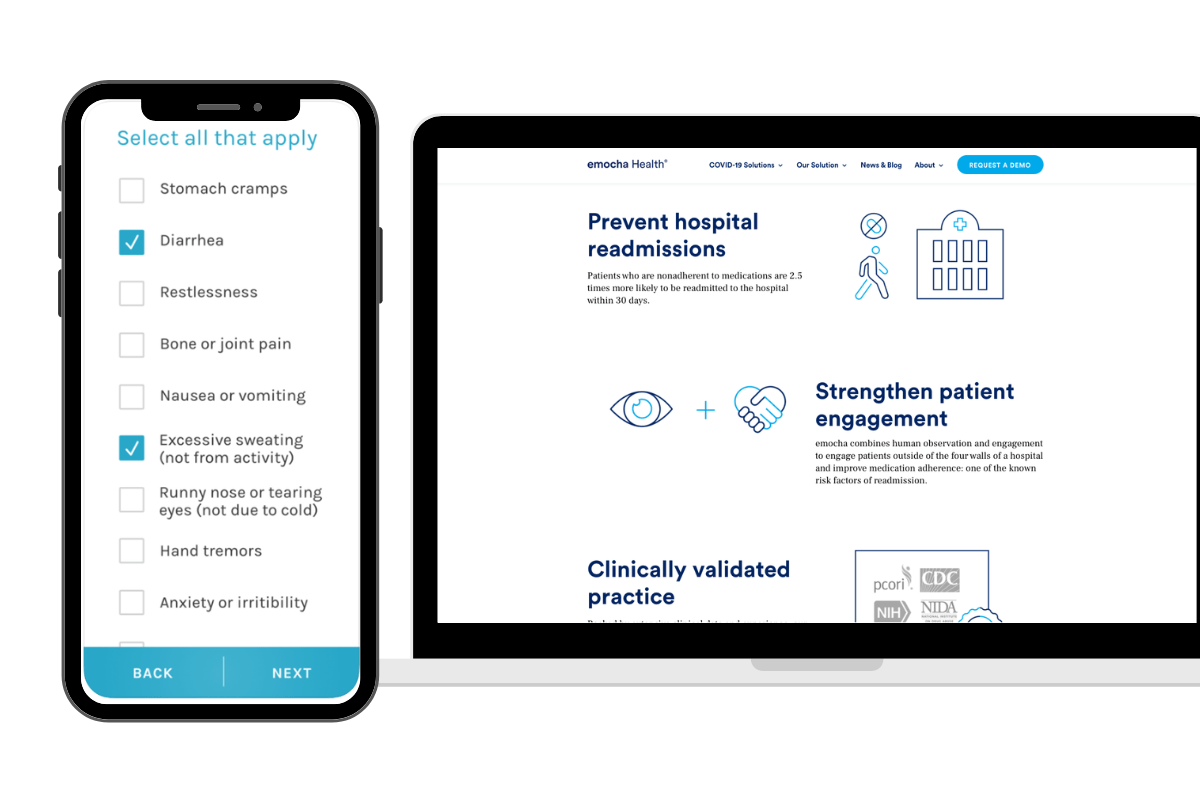
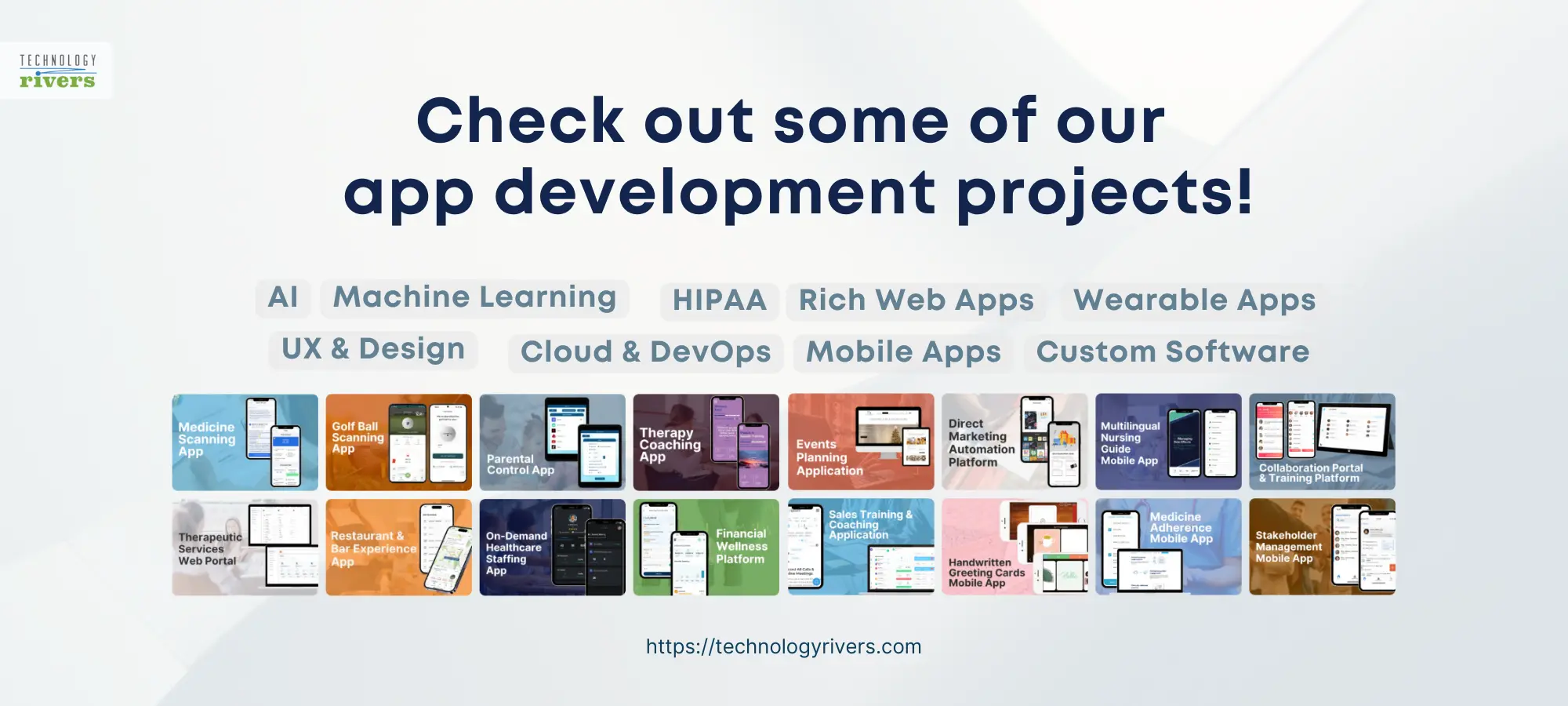
Consider a project like the Medicine Adherence Mobile App we built at Technology Rivers. The application tracks patient medication schedules and sends reminders when needed. A conversational AI workflow would allow developers to build reminder logic quickly, test different situations for missed doses, and improve notification triggers—all within a single conversation.
The same applies to real-time data environments. Our work on the Sickweather illness-tracking app involved processing real-time health signals across geographic regions. Vibe coding could accelerate how developers build and refine data ingestion pipelines, flag anomalies, and map illness trends—tasks that typically eat up entire sprint cycles.
These are not hypothetical use cases; they reflect the complexity developers face daily in healthcare technology.
4. Simplifying complex, legacy-heavy codebases
Extensive software systems quickly accumulate layers of modules, shared dependencies, and hidden legacy logic. Each new feature can disrupt something that lies several layers deep.
Developers working with these codebases often spend more time understanding the code than writing it. They trace function calls across files and reverse-engineer business rules buried in outdated modules; that cognitive load drains productivity before a single line ships.
Conversational AI simplifies these tasks by:
- Clarifying ambiguous code segments
- Outlining dependencies
- Recommending refactoring strategies
It acts as an additional set of eyes that maintains contextual understanding throughout the review process.
This is most critical in enterprise-grade systems. Our work on the Education and Career Planning Software at Technology Rivers involved interconnected modules for student profiles, career pathway algorithms, and institutional reporting dashboards.
A vibe coding approach would enable developers to navigate the architecture through targeted prompts, isolate specific modules, generate test coverage, and document logic as they build.
The bigger the codebases, the higher the payroll. Conversational coding turns sprawling systems into manageable conversations: developers stop guessing and start asking, and the AI responds with answers grounded in the actual code.
Getting started with vibe coding
Adopting vibe coding does not require a full process overhaul; you can start where there is already friction.
- Pick one repetitive task your team dreads.
- Run that task through a conversational AI tool.
- Compare the output against your manual process to measure the time saved.
That single experiment builds the case. Once developers see results on a contained task, they expand naturally: in the next sprint, they prompt the AI during design reviews, and after the sprint, they use it for deployment scripts. The key is to treat conversational coding as a skill, not a shortcut.
Developers who write precise, context-rich prompts get dramatically better output. Vague prompts produce vague code; specific prompts produce production-ready logic.
For teams creating MVPs, vibe coding speeds up the journey from idea to launch. The article AI-driven development shapes the future of startup MVPs explains this process in detail. Teams that embrace vibe coding can deliver faster, make better iterations, and allow their developers to concentrate on what really matters.
Talk to our team about integrating conversational AI into your development workflow.