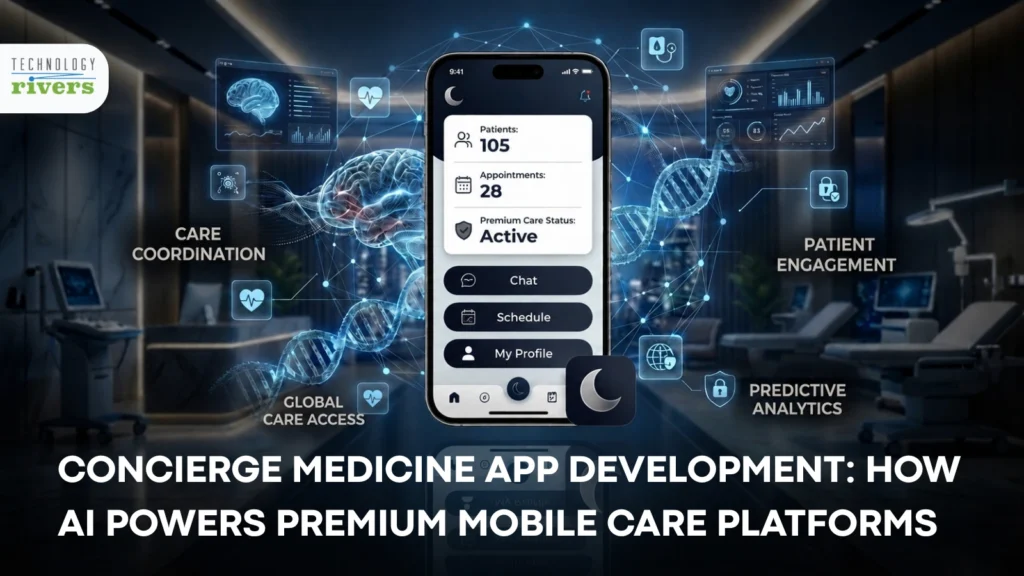
Premium care stops feeling premium the moment the app feels ordinary. That is the real challenge in concierge medicine app development.
Patients paying for membership-based healthcare expect more than a basic portal. They expect faster access, more personal communication, seamless follow-up, and an experience that reflects the level of service they are buying.
AI can help deliver that experience. It can improve responsiveness, automate repetitive workflows, support proactive care, and make premium healthcare mobile apps feel more personalized without forcing providers to scale staff at the same pace.
But in healthcare, smarter features are never enough by themselves. HHS requires safeguards for protecting electronic protected health information, which is why security and compliance have to be built in from the start.
For concierge practices, longevity clinics, and premium digital health startups, the real question is not whether to build an app. The real question is how to build one that feels white-glove on the surface while remaining secure, compliant, and scalable underneath.



What concierge medicine app development really means
Concierge medicine app development is not just patient portal development with better branding. It is a product strategy built around a membership-based care model where access, trust, continuity, and personalization are part of the service itself. That changes what the app needs to do. A concierge healthcare app usually needs to support direct messaging, faster scheduling, personalized care plans, premium onboarding, secure document access, and ongoing engagement between visits. Building a premium healthcare app also depends on trust. It also changes the business stakes. When patients pay recurring membership fees for premium access, the software becomes part of the value proposition.Why premium healthcare services need a different mobile app experience
A standard telehealth experience is often designed for throughput. Concierge care is different because it is built around relationship quality. Patients in this model usually expect:- fast, secure access to physicians or care teams
- simple scheduling and rescheduling
- clear care plans and follow-up visibility
- direct communication without friction
- continuity between appointments
- a polished experience that reinforces trust
How AI improves concierge medicine mobile apps
AI is most useful in concierge medicine when it supports the care experience without replacing the human relationship.Personalized patient engagement
AI can tailor reminders, education, follow-up prompts, and care recommendations based on patient behavior, wellness goals, or longitudinal history. That is especially useful in concierge and longevity models where the patient relationship extends beyond isolated appointments. A stronger AI foundation helps teams think through how these workflows should be designed in healthcare settings.Smart scheduling and triage
AI can help categorize requests, prioritize urgency, reduce scheduling friction, and route non-clinical questions more efficiently. That helps preserve the premium patient experience without overloading providers.AI-assisted documentation
Documentation is one of the clearest places where AI adds value. Technology Rivers’ healthcare AI guidance highlights clinical notes, billing support, reporting, and workflow automation as practical use cases. The same guidance notes that startups use AI to accelerate development and operational efficiency in healthcare products.Proactive care and retention
Concierge care is often positioned around prevention, continuity, and personalized intervention. AI can help surface adherence issues, engagement gaps, or health trends that support more proactive outreach. This becomes even more valuable when practices are building around secure AI workflows.
Must-have features in a concierge healthcare app
In premium healthcare, design is not just visual polish. It is part of how trust is communicated. Our founder, Ghazenfer Mansoor, discusses how user experience makes or breaks an app. The broader point is simple. Concierge apps succeed when they feel calm, direct, and high-service, especially for patients who expect ongoing access and continuity. The strongest premium healthcare mobile apps usually combine high-touch UX with quiet operational rigor. Core features often include:- secure messaging with direct provider access
- appointment scheduling and rescheduling
- membership details and billing visibility
- personalized care plans and reminders
- lab results and secure document sharing
- wellness tracking or RPM integrations where relevant
- admin dashboards for care teams
- AI-assisted summaries and workflow support
HIPAA, PHI, and OCR risks you need to address early
This is where many premium healthcare apps get into trouble. Teams focus on user experience first and assume compliance can be fixed later. That is expensive and risky. Healthcare products handling PHI need clear safeguards around access, storage, auditability, and data transmission. For concierge apps, PHI may include:- patient names and identifiers
- care plans and visit histories
- lab results and attached documents
- messages tied to treatment or care coordination
- wearable or biometric data linked to an individual
Architecture decisions that make or break a premium healthcare app
A polished UI does not create a premium healthcare product by itself. Architecture determines whether the experience stays reliable, secure, and scalable as the practice grows. For concierge medicine app development, the product should usually be designed with:- a mobile-first frontend built for speed and clarity
- a secure backend with encryption and role-based access
- AI components separated by defined PHI boundaries
- integration planning for EHRs, labs, and wearables
- scalability for multi-provider growth and future service expansion
Premium digital health execution in practice
A strong case study fit for this topic is the Konsuld platform we built. Konsuld is a scalable telehealth solution that connects patients and doctors while maintaining secure architecture. Concierge care depends on seamless doctor-patient communication, strong responsiveness, and a polished digital experience. Another relevant example is the remote monitoring solution that we built using HIPAA-compliant architecture, secure data pipelines, and scalable cloud infrastructure to support real-time patient tracking and faster response to critical events. That matters for concierge medicine because premium care increasingly includes between-visit engagement, longitudinal monitoring, and more proactive service delivery. “Technology Rivers doesn’t just check the boxes on HIPAA and HITECH compliance, they build solutions that are genuinely secure, private, and constructed to best practices. In healthcare and digital medicine, that distinction is not a minor one. It is everything.” – Gorkem Sevinc, Healthcare CTO, CEO, Co-Founder at QualyticsFinal Thoughts
Concierge medicine app development requires more than a sleek interface. It requires product thinking that understands premium care delivery, patient trust, AI-enabled workflows, and healthcare compliance at the same time. When done well, AI can help concierge providers deliver faster communication, better continuity, smarter operations, and more proactive service without losing the human feel that makes the model valuable. But that only works when the platform is designed with secure architecture, clear PHI boundaries, and premium UX from the start.