
Imagine pouring your heart, soul, and a sizable chunk of your budget into a groundbreaking software idea, only to watch it crash and burn because of one critical misstep: choosing the wrong development strategy.
It’s a common dilemma for entrepreneurs and business leaders planning a new software project. The choice you make can greatly impact your product’s success, timeline, and budget. Each option comes with its own set of benefits and challenges. In this guide, we’ll explore four primary software development options:
- Do It Yourself (You are a product developer)
- Outsource It (See Why You Should Do It)
- Build an In-House Development Team
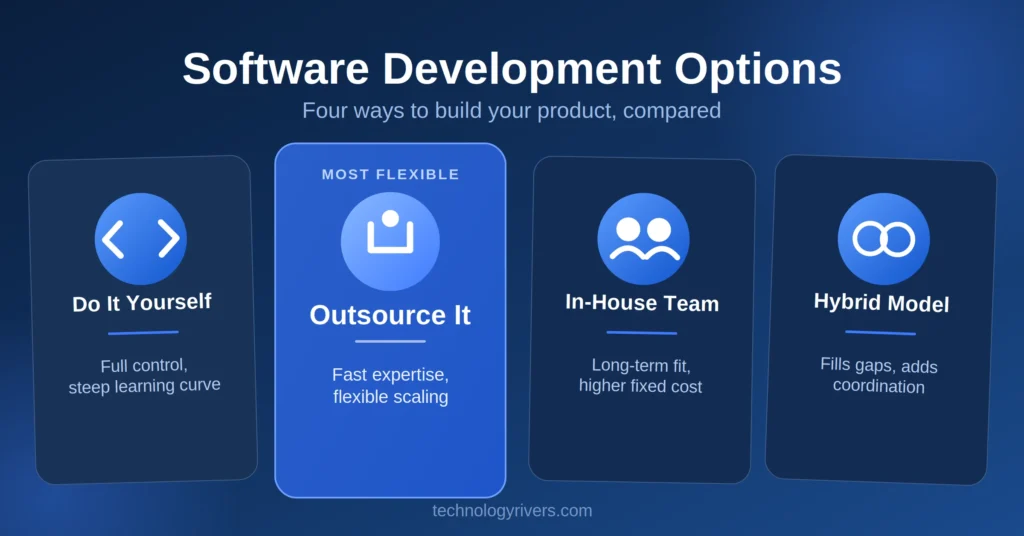
- Use a Combination of In-House & Outsourcing
Regardless of your role, be it a seasoned developer, a startup founder, or a business manager, the decision you make will profoundly influence your project’s outcome. The variety of options can seem daunting, but gaining a clear understanding of each will enable you to choose the best path forward, whether that means building in-house, outsourcing to a trusted and reliable software development partner, or a blend of both.
In this comprehensive guide, we’ll explore:
- The pros and cons of building software yourself
- The benefits and challenges of outsourcing your software development
- Effective strategies for balancing in-house and outsourced development
By the end of this article, you’ll have a well-defined path to your ideal development solution. Let’s dive in and explore the best way to bring your software vision to life.
How the Development Process Works
Regardless of who builds your software, the underlying process looks similar: define the strategy and requirements, design the user experience, architect the technical foundation, develop and test the product, then launch and iterate based on real feedback. We walk through each of these stages in detail in our software development process, and most delays and budget overruns trace back to skipping or rushing one of those steps rather than picking the wrong option outright.

The stakes are higher still in healthcare. Compliance requirements, PHI handling, and longer audit cycles mean a single overlooked process step can turn into a six-figure setback long before the product ever reaches a patient or provider, exactly the pattern we break down in our free eBook, The $1M Mistake: Why Healthcare Software Projects Fail and What Smart Leaders Do Differently.
With the process itself understood, the real question becomes who should be the one running it.
Doing It Yourself (You Are A Product Developer)
While developing software in-house might seem appealing, it’s important to weigh this option against the benefits of outsourcing. Here are some scenarios where building software in-house could be beneficial, but also some critical considerations that highlight why outsourcing might be a better choice:
Why It’s Tempting
- Cost-Efficiency: Utilizing your team’s existing skills can save on hiring external developers. However, consider the long-term costs associated with training, maintaining, and scaling an internal team, which might outweigh initial savings.
- Full Control: Maintaining control over the development process ensures alignment with your vision. Yet, this requires significant oversight and management, which can be resource-intensive.
- Direct Vision Implementation: Implementing your vision directly allows for faster adjustments based on real-time feedback. However, this can be challenging without the streamlined processes and specialized expertise that an outsourcing partner can provide.
Where It Falls Short
While the benefits are clear, there are important factors that often make outsourcing a more attractive option:
- Expertise Required: Developing software in-house requires a broad range of skills. Without the necessary expertise, you may encounter common pitfalls such as code inefficiencies, security vulnerabilities, and project management challenges. As Ghazenfer Mansoor writes in Beyond the Download: “Coding an app without the right foundation may burn valuable time and produce subpar results.” Outsourcing provides access to experienced professionals who can navigate these complexities effectively.
- Resource Intensive: Building software demands significant time and effort, potentially straining your team’s workload and productivity. Outsourcing allows your internal team to focus on core business functions, enhancing overall performance and efficiency.
- Risk of Inefficiency: In-house development, particularly if your team lacks extensive experience, increases the risk of mistakes and inefficiencies. Outsourcing to a reputable firm ensures a streamlined process, reducing the likelihood of delays and budget overruns.
- Scalability: Outsourcing offers the flexibility to scale your team up or down based on project needs, something that’s harder to achieve with an in-house team without incurring additional costs and time.
- Access to Cutting-Edge Technology: Outsourcing firms are often at the forefront of technology trends and best practices, ensuring your project benefits from the latest innovations and methodologies.
- Focus on Core Business: By outsourcing, you can concentrate on what you do best, growing your business. This strategic focus can accelerate your company’s growth and success.
While developing software in-house can seem like a cost-effective solution, it often leads to challenges such as resource strain, inefficiencies, and technical pitfalls. For businesses without extensive technical expertise, the risk of lost investment and project delays can be significant.
As Ghazenfer Mansoor writes in Beyond the Download: ‘Coding an app without the right foundation may burn valuable time and produce subpar results. Learning is valuable, but it’s worth weighing opportunity cost.’
Also managing an in-house team can divert focus from your core business activities. Consider the potential drawbacks carefully and weigh them against the benefits of outsourcing, which offers specialized expertise, streamlined processes, and the ability to bring your product to market more quickly and efficiently.
Not sure if your team has the bandwidth or expertise to build this alone? Reach out to us! Technology Rivers can help you determine what’s possible for your project.
Outsource It (See Why You Should Do It)
Outsourcing your software development offers numerous advantages, providing flexibility and access to expert talent that startups and growing businesses often need. Here’s why outsourcing could be the ideal solution for you:
Why It Works
- Access to Expertise: For startups without in-house technical skills, outsourcing provides access to specialized skills without running a full hiring cycle. For example, a screen-time and learning app for parents was built this way, kids earn playtime through educational activities, while parents manage individual profiles and limits.
- Flexibility in Scaling: Outsourcing allows you to easily scale your team up or down based on your project needs. This adaptability ensures you meet your deadlines without overcommitting your resources, providing the perfect balance between efficiency and scalability.
- Cost and Time Savings: Skip the lengthy hiring process and reduce overhead costs. Outsourcing lets you redirect those saved resources toward innovation and growth, ensuring you get the most value for your investment.
- Guided Development: When you partner with an experienced software development firm, you gain invaluable guidance on best practices and strategic insights to avoid common pitfalls. Their streamlined development process ensures your project runs smoothly from start to finish.
- Efficiency in Execution: Outsourced teams are typically more efficient, having refined their processes through countless projects. This expertise translates to faster delivery times and higher quality outcomes, giving you a competitive edge in the market.
- Focus on Core Business: Outsourcing allows you to concentrate on what you do best, growing your business. While the experts handle the development, your internal team can focus on core operations, accelerating your company’s overall growth and success.
Choosing the Right Partner
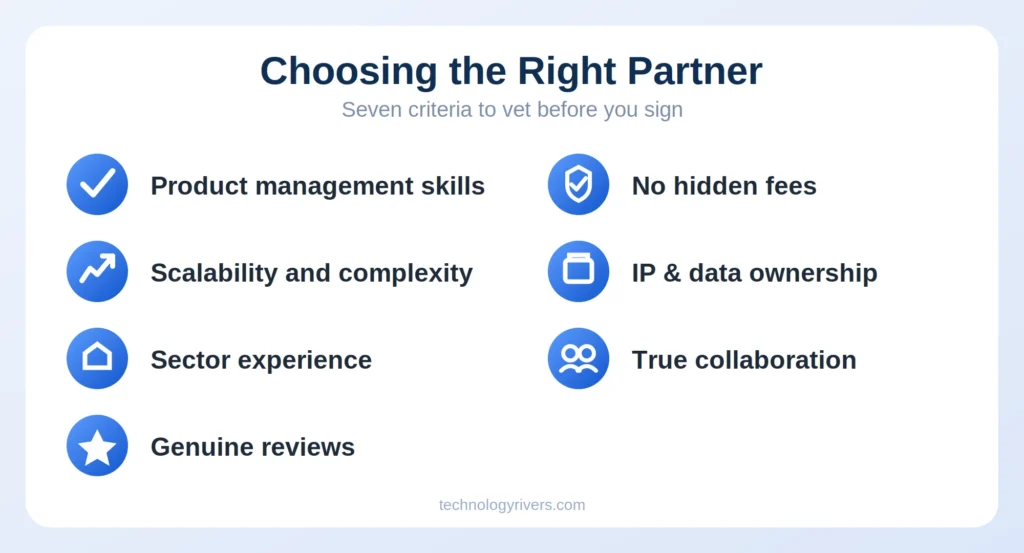
Look for a company that not only excels in programming but also offers strong product management and has experience in your specific industry. Here are some tips to help you find the right partner:
- Product Management Skills: Ensure the firm excels in product management, guiding your product toward success by setting priorities, defining components, and allocating tasks effectively.
- Scalability and Complexity: Select a firm with proven experience in developing scalable and complex applications. Ask about the largest projects they have completed and the technologies they used.
- Sector Experience: Choose a partner with significant experience working with companies of similar sizes and types. For instance, if you are a startup, select a vendor familiar with the fast-paced startup environment.
- Genuine Reviews: Identify genuine and sponsored reviews. Speak with past clients and ask detailed questions about their experiences, adherence to deadlines, and cost management.
- Avoid Hidden Fees: Look out for hidden fees and clarify all costs upfront. Ensure the firm offers genuinely fixed-price projects.
- IP and Data Protection: Plan for transition right from the start. Make sure you own and control all software and accounts to prevent being locked in by the service provider.
- True Collaboration: Seek a partner who offers more than just development. Look for a firm that provides growth strategies, effective approaches, and connections with potential clients, partners, or investors.
What to Watch For
While outsourcing offers many benefits, it’s crucial to be aware of potential pitfalls:
- Communication Challenges: Miscommunication can lead to misunderstandings and project delays. Establish clear communication channels and regular check-ins to keep everyone on the same page.
- Quality Concerns: Not all outsourcing firms deliver the same level of quality. It’s essential to thoroughly vet your potential partners. Look for firms that have strong product management skills and a track record of developing scalable and complex applications.
- IP Protection: Protecting your intellectual property is paramount. Ensure your outsourcing agreement includes strong IP protection clauses. Use compartmentalization, secure communication channels, and regular audits to safeguard your IP.
- Hidden Costs: Be wary of unexpected costs. Clarify all potential fees upfront to avoid surprises later on. Choose firms that offer transparent, fixed pricing with no hidden costs.
- Cultural Differences: Different work cultures can affect project outcomes. Understanding and accommodating these differences can help foster better collaboration.
Outsourcing your software development can be a strategic move to mitigate many common pain points such as inadequate product strategy, communication barriers, and budget uncertainty. By partnering with a team of experts, you gain access to specialized skills and streamlined processes that ensure high-quality outcomes.
Outsourcing allows you to focus on your core business activities, reducing the time drain and technical dependency on your in-house team. This approach helps you avoid hidden costs, ensures scalability, and provides the security and reliability needed to protect your investment. Ultimately, outsourcing offers a clear path to achieving your software vision efficiently and effectively.
Building an In-House Development Team
For long-term projects of strategic importance, hiring a dedicated in-house development team might seem like the best approach. However, it’s essential to weigh this option against the substantial benefits of outsourcing. Here’s why an in-house team could be beneficial, but also why outsourcing might be the more attractive choice:
What You Gain
- Long-Term Investment: Building an internal team is beneficial for projects requiring ongoing development and support. Think of it as investing in your company’s future, with a dedicated team that continuously improves and innovates your software to meet evolving business needs. However, consider whether this investment is sustainable and justifiable in the long run.
- Full Capability Access: Your team’s capabilities are fully at your disposal, ensuring alignment with your business goals. Every team member is dedicated to your vision, providing tailored solutions without compromise. Yet, achieving this requires significant investment in training and development.
- Enhanced Collaboration: Working closely with your team fosters better communication and collaboration. The synergy of face-to-face interactions can spark creativity and rapid problem-solving. But with today’s advanced communication tools, outsourcing firms can offer seamless, real-time interactions that bridge any gaps.
What It Costs You
While the benefits are clear, several challenges highlight why outsourcing might be a more advantageous option:
- Intensive Hiring Process: Finding and onboarding the right talent is time-consuming and challenging due to the competitive market for skilled developers. This process involves thorough vetting and aligning new hires with your company’s goals. Outsourcing allows you to bypass this lengthy process and immediately access top-tier talent.
- High Costs: Maintaining a full-time team can be expensive, covering salaries, benefits, and infrastructure. These ongoing expenses must be justified by the value and productivity of your team. Outsourcing eliminates these overhead costs, providing a more cost-effective solution.
- Management Overhead: Managing an internal team requires significant time and effort in oversight and task delegation. Effective management is crucial to avoid bottlenecks and ensure project momentum. Outsourcing reduces management burden, allowing you to focus on your core business activities.
- Flexibility and Scalability: Scaling an in-house team to meet project demands can be time-consuming and costly. Outsourcing offers the flexibility to quickly adjust team size and expertise based on your project’s needs, ensuring you have the right resources at the right time.
- Access to Cutting-Edge Technology: Outsourcing firms stay at the forefront of technology trends and best practices, ensuring your project benefits from the latest innovations and methodologies without the need for additional training or investment.
- Speed to Market: An in-house team may face steep learning curves and slower project initiation times. Outsourcing firms, with their streamlined processes and experienced teams, can accelerate development, helping you bring your product to market faster.
- Focus on Core Business: By outsourcing, you can concentrate on what you do best, driving your business forward. Let the experts handle the technical details while your internal team focuses on strategic growth.
Building an in-house development team provides control and direct alignment with your business goals. However, it requires a substantial investment in time, resources, and management. High costs, the complexity of finding skilled developers, and the risk of inefficiencies can pose significant challenges.
If your team lacks the expertise to handle complex tasks or if you face budget constraints, outsourcing can be a viable alternative. Outsourcing offers flexibility, reduces overhead costs, and ensures access to top-tier talent, allowing your business to focus on strategic growth without the burden of technical management.
Misalignment between business goals and the day-to-day work of an in-house team is one of the most common ways this option goes sideways, a problem covered in depth on our podcast.
Combining In-House and Outsourcing
For many businesses, using a combination of in-house developers and an outsourced team can be an option for companies facing specific challenges. Here’s when this approach might be used and its limitations:
When It Makes Sense
- Addressing Capability Gaps: If your in-house team lacks the skills to complete a project, you may need to bring in outsourced experts. For example, if your current development hits a roadblock that your internal team cannot resolve, consulting with external specialists might be necessary.
- Experimental Projects: When experimenting with a new software project, you might not want to divert your in-house team from their primary responsibilities. In such cases, hiring an outside partner can handle the experimental phase, allowing your team to focus on other ongoing projects. Once the project is built and tested, your in-house team can take over.
Where It Gets Complicated
- Resource Management: Balancing both in-house and outsourced resources can be challenging. It requires careful coordination to ensure that both teams work efficiently without redundancy or miscommunication.
- Cost Implications: While this approach can fill gaps, it may lead to higher costs due to maintaining a full-time team and paying for outsourced services. This can strain your budget, especially if not managed meticulously.
- Integration Issues: Combining different teams can lead to integration challenges. Differences in workflows, communication styles, and project management approaches can cause friction and slow down progress.
- Focus Diversion: Relying on a mixed approach might divert focus from strategic business goals. Managing both in-house and outsourced teams can be time-consuming, potentially detracting from other critical business activities.
Combining in-house and outsourced development can address immediate skill gaps and provide flexibility. However, it also introduces complexities in resource management, cost control, and integration. For companies struggling with communication barriers, quality concerns, or budget uncertainty, this hybrid approach might complicate project execution.
Outsourcing alone can offer a more streamlined and cost-effective solution, providing the expertise and efficiency needed to overcome these challenges. By fully outsourcing your development, you can ensure a more cohesive and focused approach, driving your project to success while minimizing risks and maximizing return on investment. For a real-world look at how a hybrid structure actually runs, listen to Avoiding Costly Mistakes: The Blueprint Process in Software Development, where Technology Rivers CEO Ghazenfer Mansoor breaks down running a hybrid team across six countries.
To Wrap Things Up
Choosing who will build your software is a pivotal decision that can determine your project’s success. At Technology Rivers, we understand the complexities involved in this choice and are dedicated to guiding you through the best options tailored to your needs. Here’s a quick recap of the four main software development options:
Key Takeaways
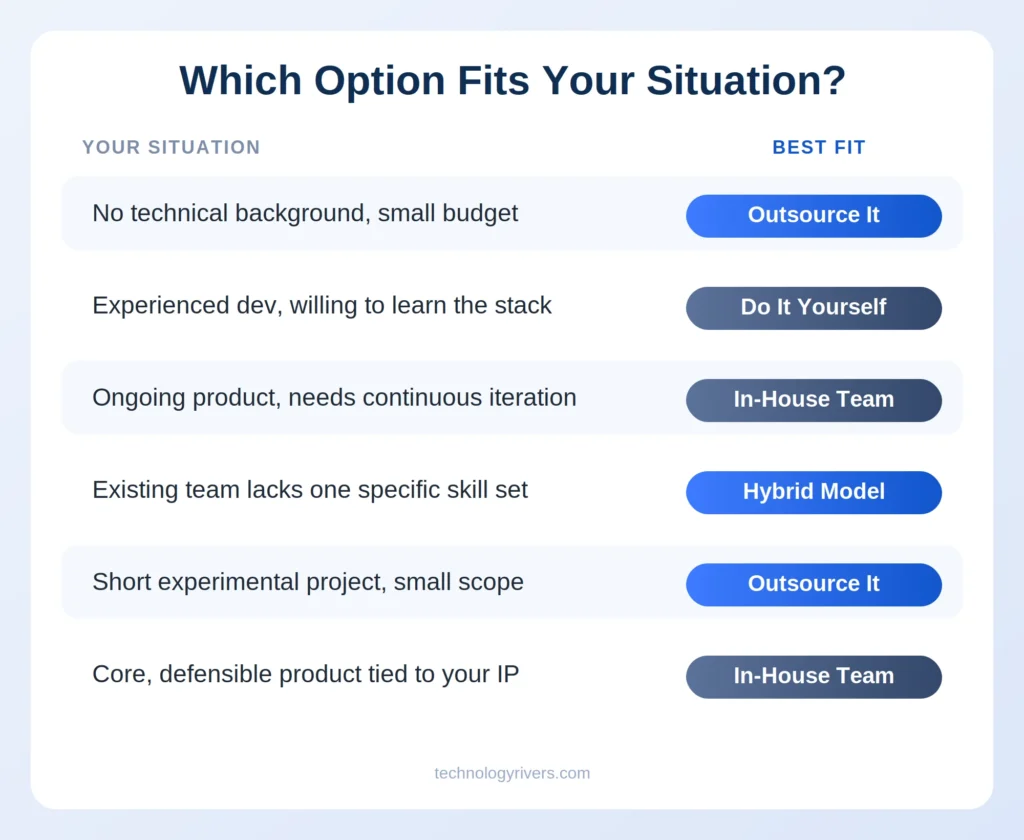
- Do It Yourself (You are a product developer): This approach can be cost-efficient if you have significant expertise and resources. It allows you to maintain full control over the project, but it comes with risks such as inefficiencies, security vulnerabilities, and project management challenges if your team lacks the necessary skills.
- Outsource It (See Why You Should Do It): Outsourcing offers unparalleled flexibility and access to expert skills, saving you time and resources. It’s ideal for startups and businesses looking to leverage specialized knowledge without the overhead. Outsourcing addresses common pain points like inadequate product strategy, communication barriers, and budget uncertainty, ensuring a smoother development process and high-quality outcomes.
- Build an In-House Development Team: While this provides control and alignment with your business goals, it requires a substantial investment in time, resources, and management. The high costs, complexity of finding skilled developers, and risk of inefficiencies can pose significant challenges. If your team lacks the expertise to handle complex tasks or if you face budget constraints, outsourcing can be a more viable alternative.
- Use a Combination of In-House & Outsourcing: Combining both approaches can fill capability gaps and provide flexibility. However, it introduces complexities in resource management, cost control, and integration. For companies struggling with communication barriers, quality concerns, or budget uncertainty, this hybrid approach might complicate project execution. Outsourcing alone can offer a more streamlined and cost-effective solution.
Making the Right Choice
Consider evaluating your current resources, expertise, and project requirements to determine the most suitable software development option for your needs. Technology Rivers is here to assist you every step of the way, offering expert guidance and customized solutions to ensure your project’s success. We specialize in addressing common pain points such as inadequate product strategy, budget uncertainty, and security concerns, providing you with the confidence to move forward. For a deeper look at vetting the right team, see our guide on choosing the right development partner.
Next Steps
Ready to bring your software vision to life? Contact us today to explore how we can help you achieve your goals efficiently and effectively. At Technology Rivers, we’re committed to delivering high-quality software solutions that align with your business objectives, ensuring a successful outcome for your project.