
Choosing the right software development partner can make or break your project before a single line of code gets written.
Imagine you’re on the brink of launching your software development project. You’ve brainstormed ideas, conducted in-depth research and feasibility studies, and meticulously set and prioritized your goals.
Now you’re at the point of execution, and the focus shifts to product development.
Whether you’re leaning on in-house capabilities or considering external capacity, your development approach needs to be tailored to your unique needs. But how do you navigate this complex phase?
Here are the possible approaches, depending on the resources you have access to:
- Build in-house yourself, if you have the necessary skills and resources for product development and programming
- Assemble your internal team, if you have the time, capacity, and budget
- Employ freelancers, as long as you have the ability and bandwidth to manage them effectively
- Outsource to an external company that specializes in software development
- Use a hybrid approach, blending in-house effort with outsourced expertise
If time-to-market is the deciding factor, here are 7 ways to get from idea to app store on a tight timeline.
If you’re leaning toward outsourcing, this article shares tips to help you filter out a bad software development partner from a good one, including the questions that matter now that AI is part of how software gets built.
What to Evaluate Before You Sign
When you’re figuring out how to choose a software development company, six things matter more than a portfolio full of logos.
Look for Strong Product Management, Not Just Coding Ability
While programmers and software engineers are vital to any software project, their efforts can fall short without effective product management. Product management plays a critical role in guiding your product toward success: it involves setting priorities, defining components, and allocating tasks and objectives. A lack of strong product management is a leading cause of failure in many outsourced projects.
Make sure the firm you’re evaluating isn’t just filled with programming talent but also excels in product management. Even the best programmer can create a technically flawless product, but it’s futile if it doesn’t align with what your customers actually need. It’s crucial for the team to deliver outcomes that match the project’s priorities and objectives.
Ask specific questions about their product management process and how they determine priority tasks, and request examples that demonstrate their approach on previous projects. A company with a clear, defined strategy can guide your project toward its actual goals instead of just shipping features.
Look for Experience with Scalable, Complex Applications
Scalable software refers to applications that can accommodate an increasing amount of data or a growing number of users. Scalability becomes necessary as your project grows. If the firm can’t keep up, you lose efficiency, and the quality of your product can suffer.
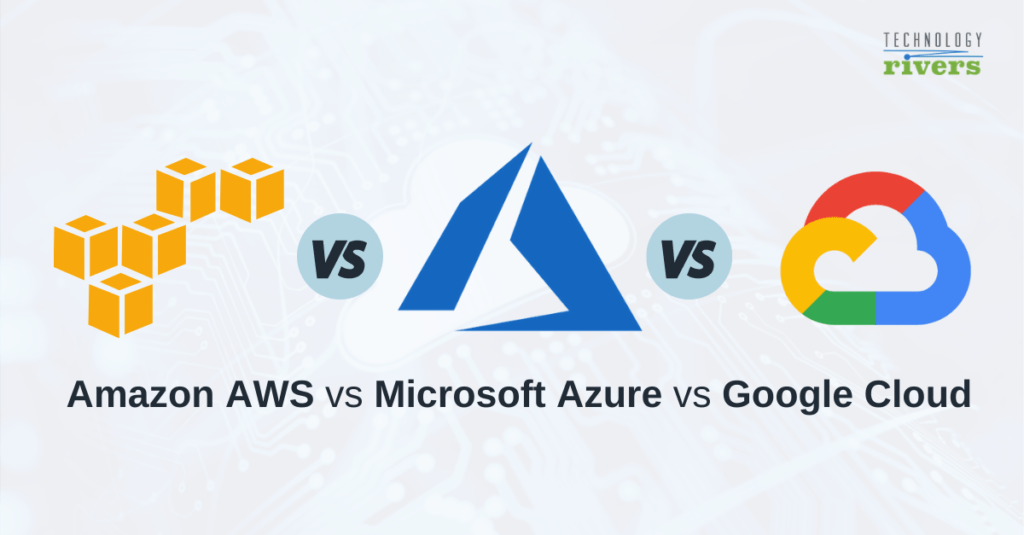
Technology Rivers builds on AWS, Azure, and Google Cloud Platform, with scalability built into the architecture from the start rather than bolted on later.
Ask what the largest project they’ve completed is. Have they successfully scaled an application from its inception to a substantial user base, and how did they manage that scalability? What technologies and cloud services did they use? Have they built anything that had to handle real complexity?
Look for a company with proven experience in the specific category of application you need. Mobile, web, and CMS-based projects all call for different specializations. A WordPress developer can build a CMS-based site but might not be the right choice for a mobile app. A team with experience in your particular category will give you more reliable, strategic advice along the way.
Make Sure They Know Your Scale and Sector
The right software development partner has significant experience working with companies of a similar size and type to yours. A firm experienced with government or non-profit work understands those processes and can deliver accordingly, but that same experience can work against you if you’re a startup.
Startups move fast with limited funding and resources. A firm used to working with government agencies or large corporations will likely struggle to adapt to startup pace and process. If you’re a startup, look for a vendor that has built for companies at a similar stage. Enterprise or government experience may be valuable in general, but it isn’t automatically a fit for a startup’s constraints.
Ask for the largest project they’ve shipped and how they handled its growth, and ask directly whether their typical client looks like you.
Ask How They Handle Code You Already Have
Not every project starts from a blank page. You might bring a prototype built with an AI coding tool, an app a previous vendor left half-finished, or an MVP that works for 50 users but struggles at 5,000.
Ask how the firm evaluates code it didn’t write before it quotes on it. A good partner reviews the codebase, architecture, and security first, then tells you what can stay, what needs work, and what should be replaced.
Be wary of a firm that agrees to build on top of existing code without looking at it, and just as wary of one that recommends a full rebuild before it has reviewed anything. An independent application assessment is one way to get that picture before you commit to a larger engagement.
Ask How AI Fits Into Their Delivery Process
AI now shows up in two places: how software gets built, and what gets built. Both are worth raising with any software development partner you’re considering. Ghazenfer Mansoor puts the first one plainly in Beyond the Download: “Ask about their use of AI, discovery and planning process, and quality control.”
Ask them to walk you through their discovery process and how user research turns into a roadmap. Ask how AI-assisted code gets reviewed for security before it ships. Veracode’s 2026 GenAI Code Security Report found that roughly 44% of AI code generation tasks introduced a risky security vulnerability in testing. A specific answer tells you more than a list of tools.
- What happens to your project if their strongest developer leaves mid-build?
- Who else knows your codebase, and where is that knowledge documented?
The second question matters more than it sounds. When a codebase changes hands without documentation, rebuilding can end up safer than continuing.
If AI Is Part of the Product, Ask How It Finds Answers
Ask whether the AI searches your own documents and data, an approach called retrieval-augmented generation (RAG), or answers from a general model. A general model doesn’t know your data, so it can produce answers that sound right without being accurate.
Then ask to see AI they’ve actually shipped, not a demo.
Questions to Ask Their References
Rankings and “top firm” lists can be a useful place to start, but they aren’t all built the same way. Some are editorial, some are based on verified client reviews, and some include sponsored placements. Before you treat a list as a recommendation, check how it was put together: who wrote it, what criteria it used, and whether any placements were paid. A ranking you found through search isn’t the same as a vetted recommendation.
The same applies to AI assistants. In a Gartner survey of B2B buyers published in May 2026, 45% said they used generative AI during a recent purchase, mostly to gather information on vendors and products, and 51% said they were more likely to encounter misleading information from GenAI. An AI answer that names a firm is a starting point, not a reference check.
Once you’ve short-listed a firm, dig into their references for real feedback, not just a positive or negative impression. Keep in mind that shared references are pre-selected to be favorable. It’s on you to dig past the polish and get something useful.
Skip yes/no questions.
Ask instead: how closely did they actually hold to deadlines, not just whether they gave you a plan? How long did it take them to produce a real plan or roadmap versus how long they said it would take? Did they charge extra for small changes, or hold to the original scope? How did they communicate when something went wrong?
References tend to be positive by default. These questions are how you get past the positivity to something useful. This is a subject Ghazenfer Mansoor spoke about directly in his interview with DC Startup Week on picking the right software development partner.
Red Flags: Signs to Walk Away
These are red flags in a software development company, patterns worth treating as disqualifying on their own, not just minor concerns.
A firm that won’t provide references. One that’s vague or evasive about who owns your code and accounts after the engagement ends. One that can’t clearly explain their product management process when asked directly. One that resists specific scoping questions before quoting a “fixed” price. One that has no change control process, or hands you a statement of work that doesn’t clearly define deliverables.
Any one of these in isolation might have an explanation. More than one is a pattern.
Red flags are easy to miss when every vendor pitches differently. If you’re choosing a healthcare software partner, the guide below keeps your evaluation consistent.

What You’re Actually Paying For
Most outsourcing proposals fall into three buckets: time and materials (you pay for hours worked), fixed price (a set number for a defined scope), or dedicated team (a monthly rate for a committed group of people).
Before you commit to a full build, consider starting with a focused discovery phase. Even a few weeks of structured conversations with your end users will surface priorities that save months of rework later, and it shows you how a firm thinks before the larger engagement begins.
Watch for the “fixed price” quote that isn’t really fixed. Some firms scope loosely on purpose, so any change becomes a billable add-on. Ask what happens if the work runs long. A firm that can hold to its number has done the scoping work up front.
Two documents protect you here. The first is a detailed statement of work with clearly defined deliverables and ownership terms. The second is a change control process agreed on before development starts, so every change request has a known path for approval.
Technology Rivers runs most projects as fixed-price, with room built in for changes as the project evolves, the kind of transparency you should expect from whoever you choose.
For a broader look at why outsourcing software development makes sense in the first place, see 6 Key Benefits of Outsourcing Your Software Development.
IP, Data, and Account Ownership
IP ownership is one of the most overlooked risks in software outsourcing. It gets ignored until it’s a crisis.
Before you engage a software development partner, make sure your DNS, cloud hosting, code repositories, and project management tools are registered in your name, not theirs.
If any part of the team works offshore, ask how your IP rights are protected for that portion of the work specifically, not just for the firm as a whole.
The alternative is finding out during a vendor transition that you don’t actually control your own product, a situation that’s more common than most first-time outsourcers expect, and far harder to unwind after the fact than to prevent at signing. This matters just as much if you’re extending an existing system as it does for a brand-new build. For contract terms, transition planning, and third-party code, see 6 ways to protect intellectual property while outsourcing software development.
What a Real Software Development Partner Looks Like
Some firms only focus on building your product. A real partner helps you grow: guiding you through the development process and offering advice on expanding your business beyond it. That can look like sharing growth strategies or offering guidance on effective approaches to the market you’re entering.
It also means they don’t disappear at launch. Ask what support looks like after release: who handles bug fixes, how updates get scheduled, and how the product keeps improving based on what users actually do.
Steer clear of firms that treat your project as just another transaction.
Ready to Evaluate Your Options?
If you’re weighing outsourcing against building in-house, talk to Technology Rivers about whether they’re the right software development partner for what you’re building. No pressure, just a clear read on scope and approach.